About Alcoutim
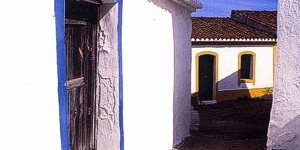
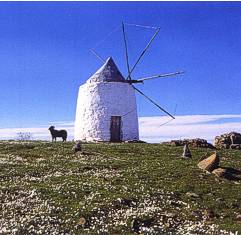
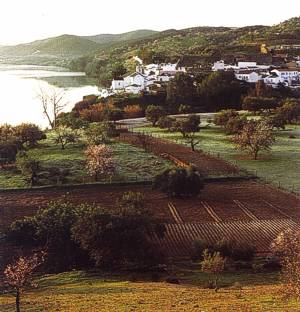
The blue river framed by cool greens of riverside vegetation, fertile orchards and gardens. The dark ochre of the hills, flecked with colour by cistus plants, holm oak and the occasional olive tree. Houses with walls of schist or baked mud white with the dazzle of lime, huddled together in hamlets lost among the hills. Such contrasts are to be found in the Alcoutim municipality.
History
Menhirs and dolmens testify to a human presence at the end of the Neolithic and beginning of the Chalcolithic (approximately 4000 BC), in the context of the megalithic culture that covered the whole of what is now Portugal. It was the deposits of copper, iron and manganese that attracted men from about 2500 BC until the time of the Roman occupation, and a number of mines were established.
The ores dug from them were smelted locally, then shipped down the Guadiana river to the Mediterranean and from there to the four corners of the Empire. Human occupation continued under the rule first of the Visigoths and then the Moors (5th-13th centuries).
Conquered during the reign of King Sancho II in 1240, the town of Alcoutim was not repopulated until that of King Dinis, who granted it a charter in 1304 and, in view of its strategic position in relation to the neighbouring kingdom of Castile, granted it to the Military Order of Sant'Iago (St. James).
At the time of the wars between Portugal and Castile in the 14th century, a peace treaty between kings Fernando I and Henrique was signed in the middle of the river, opposite Alcoutim.
Places of Interest
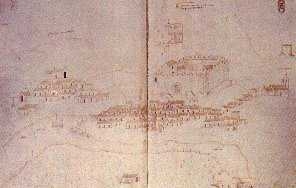
Pereiro
Archaeological finds from the Roman period bear witness to the distant origins of this settlement. Many of the houses still retain the architecture typical of the Algarve uplands.
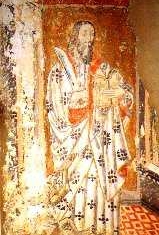
Main Church - Modest in appearance, this church dates back to the 16th century. It houses an interesting collection of painted retables and some fine statues.
Gioes
Spread over a gentle hill, the architecture of Gioes houses displays the influence of the nearby Alentejo.
Main Church - The main church is 16th century with a Renaissance porch of great simplicity. The interior is composed of three naves with columns topped with Doric capitals. Its main chapel has a neo-classical carved retable and its ceiling is decorated with paintings from the 18th century.
Near Gioes stand the ruins of the former medieval hermitage of Sao Domingos. The Hermitage of Nossa Senhora da Oliveira in Clarines is worth a visit, dating from the end of the Middle Ages.
Martinlongo
It is not known when Martinlongo was founded, though it was already inhabited at the time of the Roman occupation. It expanded rapidly from the 16th to 18th centuries.
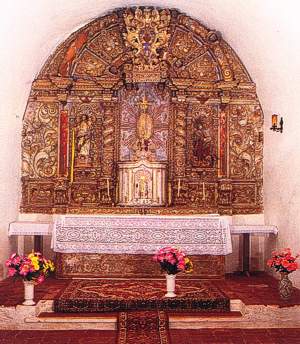
Main Church - This was originally a mosque, of which the minaret remains, now turned into a belfry. The cylindrical buttresses are probably of Moorish origin too. The church has plain gothic porches and the interior consists of three naves separated by ogival arches.
Vaqueiros
Some of the streets that frame the town's small, white church still bear witness to the picturesque traits of local vernacular architecture.
Main Church - This is an elegant architectural ensemble which dates from the 16th century. The retable of the main altar and the "altar das Almas" include painted wooden panels from the 16th century.
Following the Guadiana
There is a road that winds along the bank of the Guadiana from Alcoutim as far as Alamo. Its route leads through a landscape of harsh beauty softened by water, foliage and flowers. But the best way to discover the river's many delights is by boat.
Guerreiros do Rio
A former schoolhouse in the village is now home to the River Museum. The museum offers a fascinating insight into the Guadiana river and its history, the ancient techniques used to catch fish on the river, the life of the fishermen and of the inhabitants of the surrounding hills.
Montinho das Laranjeiras
Archaeological excavations have uncovered a series of buildings that once formed a Roman villa and an interesting Christian church built on a cruciform plan that scholars ascribe to the period of Byzantine rule over the south of Iberian Peninsula (6th/7th centuries).
Alamo
The Roman presence in Alamo is evident from a Roman villa, investigated in the 19th century, and from the thick walls of the dam that used to block the progress of the Fornalha creek.
Visiting Alcoutim
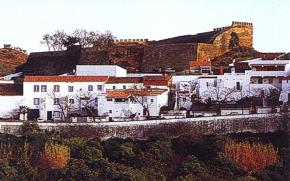
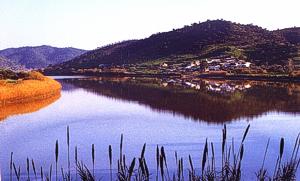
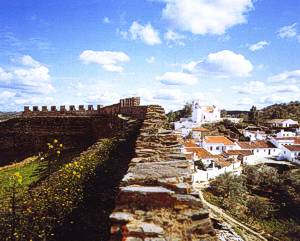
The blue ribbon of the river winding between rounded mountains covered with cistus plants. The white stain of houses rising up the slopes of hills which form an amphitheatre crowned with the belfries of churches and the sombre bulk of a formidable castle. Impressions of Alcoutim that cannot fail to charm visitors.
Historical Centre
Although it has lost the ramparts that for centuries surrounded it, Alcoutim's steep and narrow streets retain much of the calm atmosphere typical of an Algarve hill town. A few minutes' walk is enough to discover simple single-storey houses hundreds of years old and the tall white walls of the Misericordia church.
Castle
The castle stands on an imposing site overlooking the river which archaeological digs suggest was inhabited during the Iron Age. Built in the 14th century to defend the border, it was altered in the 17th century to adapt it for artillery. The broad circle of ramparts intersected with towers affords panoramic views. Inside there is a small museum displaying archaeological finds.
Main Church
This is an example of the first Renaissance buildings erected in the Algarve. Built between 1538 and 1554 on the site of a medieval church, it has a fine porch surmounted by the arms of the Marquises of Vila Real and Counts of Alcoutim.
Handicrafts
The ancient techniques of popular crafts are still preserved in Alcoutim, where locals continue to weave rag blankets, covers and linen cloths on wooden looms in villages like Clarines, Penteadeiros, Mestra Barroso, and Vaqueiros.
Women make shawls, stockings, straw hats and lace in Vascao, Cortes Pereira, Zorrinho, Lutao, Tacoes, Vaqueira, Fernandilho, and Cachopo.
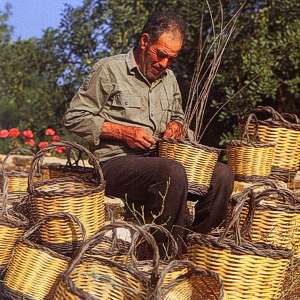
Craftsmen in Balurcos, Cortes de Seda, Clarines, Azinhal, Ferrarias, Galaxinhos, Sao Lucas and Alcaria Queimada make baskets from the reeds that grow on the banks of the Guadiana river and creeks.
Gallery