About Braga
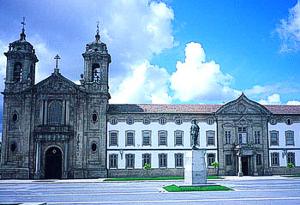
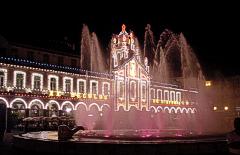
Known as the "Portuguese Rome" for its concentration of religious architecture, Braga is one of the most beautiful cities in Portugal with a deeply conservative and pious character.
The city boasts an extraordinary collection of churches, palaces and monuments spanning centuries of history. Its medieval walls, built by order of King Dinis and completed during the reign of King Fernando in 1373, still preserve the Keep, the Gate, and several towers.
Braga's population is considered the most conservative in Portugal - by some the most pious, by others the most fanatic. Either way, the city's rich religious heritage and beautiful architecture make it a must-visit destination in Northern Portugal.
Places of Interest
Historic Buildings
Paco Arquiepiscopal Bracarense
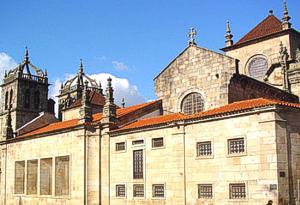
An extraordinary assembly of three different sections, each unique in design due to constructions made centuries apart. The North Wing (facing St Barbara's Garden) is Gothic style from the 16th century. The West Wing (facing the Municipal square) is late Baroque from the 18th century. The South Wing defines the beautiful town square, integrating several constructions commanded by various Archbishops in the 16th, 17th and 18th centuries.
Torre de Menagem
The only construction remaining from the old Castle of Braga, this medieval keep stands as testament to the city's fortified past.
Casa dos Coimbras
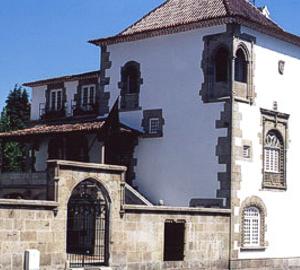
Situated in Santa Cruz Square, this house has origins in a previous construction from 1471. In 1505 it was acquired by Dr. Joao de Coimbra and underwent several reconstructions by Biscainhos artists. Today, only some Manueline-style windows from the 15th century survive from a demolition in 1906.
Religious Heritage
Se Cathedral
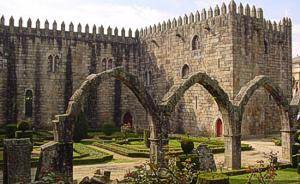
Built in the 12th century by Count Henry of Burgundy and Dona Teresa. Following Henry's demise, Teresa was chased out of town due to an illicit love affair, but in death they were reunited in their tombs in the Chapel of Kings. Visit the Treasury and the Museum of Sacred Art with elaborately carved choir stalls from the 18th century, embroidered vestments from the 16th-18th century, and a 14th-century statue of the Virgin.
Igreja da Misericordia
Founded in 1562, the Misericord Church was almost totally rebuilt in the 18th century. The facade is in Italian Renaissance style. Standing against the Cathedral, it is easy to miss.
Raio Palace
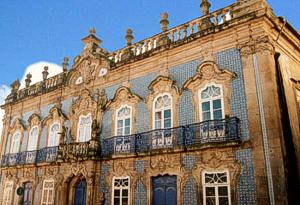
Built in 1754, the Palacio do Raio is one of the most notable buildings of civil architecture in the city, in Joanine Baroque style. Named after Miguel Jose Raio, Viscount of Sao Lazaro, who bought it in 1834. Noteworthy is the forged iron work in the balconies of the noble floor.
Museums and Cultural Sites
Museu dos Biscainhos
Located in Biscainhos Palace, a building from the 17th and 18th centuries that served as a noble family's house for about 300 years. The original gardens remain. The museum interior has painted and ornamented ceilings with panels of figurative and neoclassic tiles. Exhibition rooms contain collections of Portuguese furniture and pottery, glassware, silverware, textiles, and Portuguese, Oriental, and Dutch Delft porcelain.
Fonte do Idolo
The only known Roman monument of "Augusta Bracara" in Portugal, this fountain is a rare surviving link to the city's Roman heritage.
Nearby Sanctuaries
Not far from the city centre are three important sanctuaries: Bom Jesus, Sameiro, and Santa Marta da Falperra.
Santuario do Bom Jesus do Monte
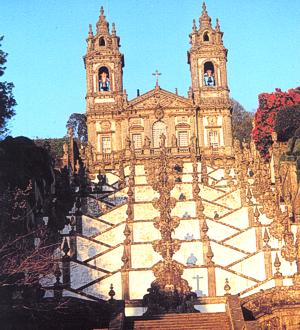
Bom Jesus do Monte is a hilltop pilgrimage site reached on foot, via funicular, or by car along a tree-lined roadway. The baroque granite double staircase dating from the 18th century may look exhausting, but pilgrims often climb it on their knees.
Less elaborate than the stairway of Remedios at Lamego, the stairs at Bom Jesus are nevertheless equally impressive. On the numerous landings are gardens, grottoes, small chapels, sculptures, and allegorical stone figures set in fountains.
Getting There
By Train
Regular trains connect Braga to Porto (about 1 hour). From Lisbon, change at Porto Campanha.
By Car
Braga is about 55km north of Porto via the A3 motorway. The journey takes approximately 45 minutes.