About Braganca
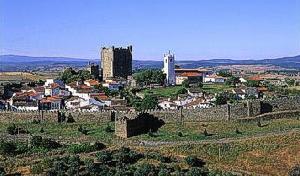
In the remote northeast corner of Portugal, Braganca preserves one of the country's most impressive medieval citadels and gave its name to Portugal's last royal dynasty.
The origins of the town go back to a series of fortified structures that were transformed in the time of King Dom Afonso I into a proper walled citadel by his brother-in-law Fernao Mendes. Completed around 1130, the place was named "Brigantia", and within its walls in 1187 Dom Sancho I built the castle that still stands today.
This town gave its name to the last Portuguese royal lineage - the House of Braganca, descended from the illegitimate son of Dom Joao I who was created Duke in 1442. The tower of the castle became a place of imprisonment or refuge for many historic personages, including Dona Sancho, the unfortunate wife of its constructor.
Sightseeing
The Medieval Citadel
Castle, Walls and Keep
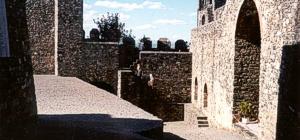
The citadel of the old Brigantia was rebuilt in the 12th century. In the centre of the castle's four cylindrical towers rises the keep (Torre de Menagem). The walls include 15 cubels and three gates, and are crowned by a patrol path.
Domus Municipalis
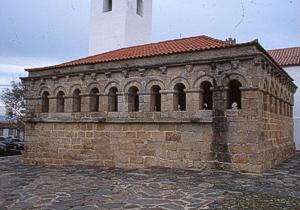
This curious pentagonal building is believed to date from the 12th century, in which case it could have served as a city hall. Some authors suggest its origins could date back to Roman occupation, or even before, making it a vestige of Greek domination - though this has never been proven. It is a unique example of civic Romanesque architecture in Portugal.
Churches and Religious Sites
Igreja de Santa Maria
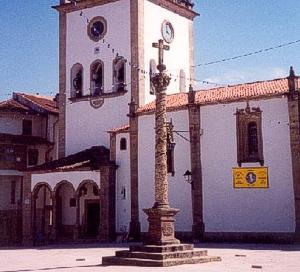
An 18th-century temple situated within the walls. The entrance portal and the niches on the sides are predominantly Baroque.
Se Cathedral
The Cathedral of Braganca dates from the 16th century, founded by Duke D. Teodosio. For a long period it was occupied by Jesuit priests. After the expulsion of the Jesuits, it reverted to the crown and was later donated to the bishop of Miranda.
Igreja de Sao Bento
This church belonged to the ancient Convent of St. Benedict, founded in the 16th century. Worth admiring is the rich gilded wood-work of the Mudejar ceiling in the main chapel, dating from the 17th century.
Convento de Santa Clara
Adjacent to the 12th-century Domus Municipalis, the church of Santa Maria (18th century) features an elaborately carved portal.
Museums
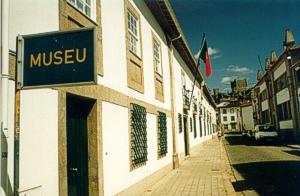
Museu do Abade de Bacal
Its garden contains archaeological remains dating back to the Iron Age, and its two floors exhibit Tras-os-Montes furniture, tools, ancient coins, Indo-Portuguese furniture, and paintings. The Abbot of Bacal was a diminutive scholar who recorded in many volumes the history and customs of the region.
Museu Militar
The citadel's Keep houses the town's military museum with memorabilia from the Spanish and Napoleonic wars, during which Braganca was occupied.
Getting There
By Car
Braganca is in the remote Tras-os-Montes region, about 255km from Porto via the A4 and IP4. The journey takes approximately 2.5 hours.
Nature
The surrounding Montesinho Natural Park offers spectacular hiking through traditional villages and pristine landscapes near the Spanish border.