About Coimbra
Coimbra holds a special place in the hearts of all Portuguese - an ancient seat of learning with a university founded in 1290, making it one of the oldest in the world.
This historic city served as the capital of Portugal from 1139 to 1256, and six Portuguese kings were born here. Known as the original Roman settlement of Aeminium, it later developed under the influence of the greater nearby town of Conimbriga, now one of the most important archaeological sites on the Iberian Peninsula.
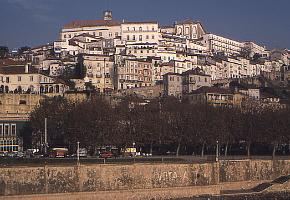
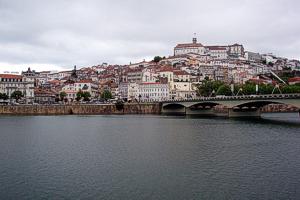
The skyline above the lower city reveals its true purpose as a centre of learning, dominated by the magnificent university buildings perched on the hill. Every May, students celebrate the end of the academic year with the "Queima das Fitas" - the traditional burning of faculty ribbons.
What to See
The University
University of Coimbra
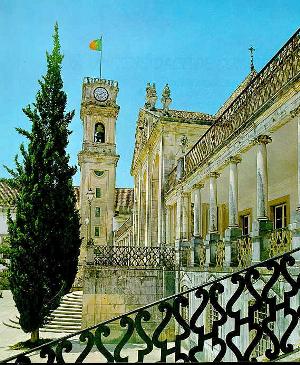
Founded in 1290, Coimbra is popularly known as the "Oxford of Portugal". The university occupies a stunning hilltop position and contains some of Portugal's finest buildings.
Biblioteca Joanina (King John V Library)
The most dramatic of the university's ancient treasures is this breathtaking library with superb frescoes and tables of rosewood and ebony etched with Chinese designs in gold. Three large rooms are decorated with engraved wood lacquered in red, green and gold, connected by high archways. The walls are entirely covered by solid bookshelves of exotic woods, and the library houses a collection of 300,000 volumes.
Students indicate their faculty by coloured ribbons attached to their traditional black capes. The "Fados de Coimbra" - lighter, happier versions of Portugal's traditional fado songs - reflect the optimistic attitude of student life here.
Cathedrals
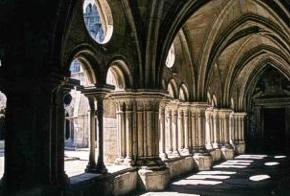
Se Velha (Old Cathedral)
This Romanesque masterpiece dates from the reign of King Afonso Henriques, a period of major splendour for Coimbra's architectural workshops. The Old Cathedral represents one of the finest examples of Romanesque architecture in Portugal.
Se Nova (New Cathedral)
Originally a Jesuit College and Church founded in 1541, this building remained with the Order until the Marquis of Pombal expelled the Jesuits from Portugal in 1759. The impressive main facade follows the Jesuitical typology with a tripartite entrance, designed by Order architect Baltazar Alvares who started construction in 1598.
Monasteries and Churches
Santa Cruz Monastery
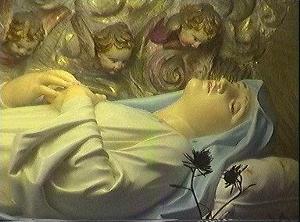
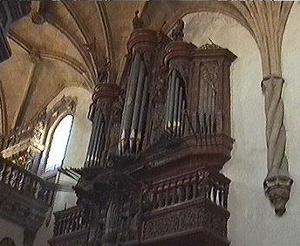
Founded in 1131, this was the most important monastic house of the Portuguese monarchy. Dedicated to the Order of St. Augustine, it accumulated considerable patrimony through papal privileges and royal grants. King Afonso Henriques chose to be buried here - testament to its importance. The medieval school was essential as a meeting point for intellectual and power elites.
Santa Clara-a-Velha Monastery
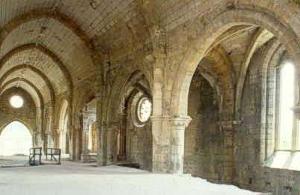
Founded in 1286 and reconstructed in 1314 by Queen Elisabeth of Aragon under master Domingos Domingues. The church was consecrated in 1330, but constant floods from the Mondego River caused progressive silting until the community abandoned it in 1617 for Santa Clara-a-Nova.
Santa Clara-a-Nova
The new monastery that received the community from the flooded original.
Igreja de S. Tiago
Igreja do Carmo
Convento de Celas
Gardens and Parks
Botanical Gardens
Created by the Marquis of Pombal, these are considered the most beautiful botanical gardens in Portugal. Besides many rare plant species, visitors can admire ornamental features including statues and fountains.
Portugal dos Pequeninos
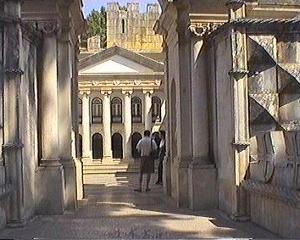
Children will love this park featuring child-sized models of typical Portuguese houses, mansions, temples and palaces from across the country - a miniature Portugal to explore.
Nearby: Conimbriga
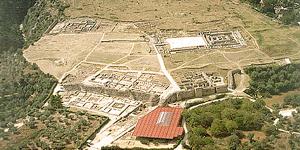
Conimbriga Roman Ruins
A short drive from Coimbra lies the largest Roman settlement in Portugal, well worth visiting on any tour of the central and northern regions. Built in layers, the earliest date back to the first Iron Age in the 9th century BC. The site features remarkably preserved mosaics, the foundations of houses, and an excellent museum displaying artifacts from the excavations.
Getting There
By Train
Regular trains from Lisbon Santa Apolonia station (approximately 2 hours). Coimbra-B is the main station; change to Coimbra-A for the city centre.
By Car
Coimbra is located on the A1 motorway, approximately 200 km north of Lisbon and 120 km south of Porto.