About Lagoa
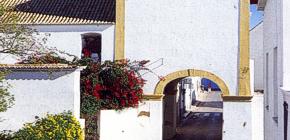
Lagoa is known for its wine, which carries the Algarve to the rest of Portugal. Rising on a small hill, surrounded by vineyards, its white houses gleam in the distance.
An extremely calm town in contrast to the bustling tourist centers of the coast, it takes pride in its small gardens, beautiful church, and water reservoir. It is not known when Lagoa was founded, and it was only after 1773, when it was elevated to the status of a town, that its history was first documented. However, it is known that Estombar and Porches were important centres in the Islamic and medieval periods and that Ferragudo had defensive ramparts. Nowadays Lagoa is at the forefront of the modern Algarve.
Beaches
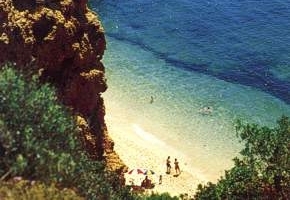
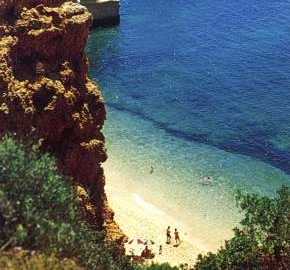
Viewed from the sea, the coast is a series of brightly coloured cliffs, strangely shaped outcrops and caves, whose almost unreal beauty is set off by the clarity of the waters. Between the rocks long stretches of sand alternate with tiny coves that can only be reached by boat.
Angrinha & Praia Grande
Two beaches next to Ferragudo separated by the Fort of São João de Arade. On Angrinha beach there are facilities for windsurfing and canoeing.
Pintadinho
A small beach where the water is calm.
Caneiros
Situated between cliffs of great beauty. Opposite, the colourful rock of Leixão das Gaivotas. Very tranquil.
Carvoeiro Beach
The charm of a fishermen's beach and a small bay with crystal clear water. A cosmopolitan tourist centre. Boats can be hired to visit caves and isolated beaches.
Vale Centeanes
Scenic location between rocks and cliffs. Good conditions for surfing.
Benagil
Charming beach next to a pretty fishing village. It is possible to hire boats to get to isolated beaches and the famous Benagil Cave.
Carvalho
Stretch of sand between ochre cliffs. Peaceful. Tourist facilities.
Marinha, Barranquinho, Albandeira & Barranco
A series of small beaches which can be reached along the coast by way of rocks and natural tunnels. Little visited and quiet.
Praia Nova & Senhora da Rocha
Two beaches separated by the spur of rock on which stands the Chapel of Nossa Senhora da Rocha, but connected by a tunnel. It is possible to hire boats to explore the coast or get to isolated beaches.
Cova Redonda
Small and charming beach between cliffs. Tourist facilities.
Golf
Quinta do Gramacho
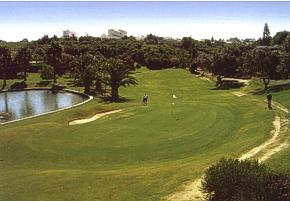
With just nine holes, Quinta do Gramacho has nevertheless a complete course layout, thanks to its double tees and greens.
Vale da Pinta
Situated near Carvoeiro in an old olive grove, Vale da Pinta is a championship course that is adaptable to any kind of game.
Vale do Milho
This is a short nine hole course which is visually very attractive, yet surprising because of its challenging nature. Ideal for practising with short irons.
Sightseeing
Lagoa Town
A hill rises above flat lands where in days gone by, as tradition has it, there was a lagoon. At the top, the tower of a church is visible, above a labyrinth of whitewashed houses. This is Lagoa, where Manueline doorways, windows edged in blue and the imposing turret of the monastery create a feeling that time has stopped and suggest ways of life now long forgotten.
Historical Centre - The town grew up around its main church. There is still a feeling of the past in the streets of white houses where, here and there, it is possible to spy a chimney trimmed with the delicate decorative filigree typical of the Algarve. The winding streets are dotted with altars marking the stations of the cross used in the old Holy Week ceremonies, and more than a dozen Manueline doorways and windows (16th century).
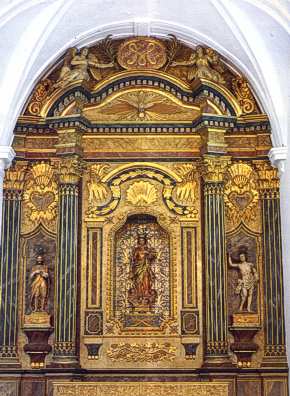
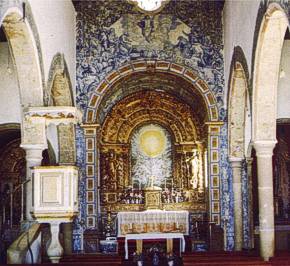
Main Church - All that remains of the place of worship built in the 16th century is a Manueline doorway to the bell tower. The current building dates from the end of the 18th century and the beginning of the 19th, and has an attractive baroque facade with neo-classical elements. The chief point of interest inside the church is the retable on the main altar, with a perfect 18th century representation of Nossa Senhora da Luz (Our Lady of Light), the church's patroness, attributed to the sculptor Machado de Castro, and São Sebastião (St. Sebastian). On the other altars are icons and reliquaries from the 17th and 18th centuries.
Misericórdia Church - Plain fronted and small in size, this church has a carved main altar dating from the 18th century, with a statue of the crucifixion. The walls are covered in patterned tiles dating from the end of the 17th century.
Monastery of São José - Built at the beginning of the 18th century in a sober, rural style, it has been rebuilt and repaired on many occasions since. It boasts a chapel with carved altars from the former Chapel of the Compromisso Marítimo (Maritime Agreement). There is an interesting belvedere with an arch over the street. At the entrance to the monastery there is an 'outcast hatch', which was once used for receiving abandoned children. In the garden there is a menhir from Porches (5,000 to 4,000 BC).
Ferragudo
A fishing village since time immemorial - there were Roman salting tanks next to the Fort of São João de Arade, it had defensive walls in the Middle Ages, vestiges of which are still visible today. It has preserved its original character, with rows of houses cascading down to the river, crowned by the outline of the church high on the hill, and pretty streets of whitewashed walls and roofs intersected by decorated chimneys.
Church of Nossa Senhora da Conceição - The architecture of this building is typical of a country church.
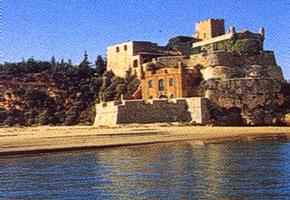
Fort of São João de Arade - With the facing fortress of Santa Catarina, this fort constituted the main defence of the Arade estuary. It began life as a lookout tower in the 15th century and was extended in the 17th and 18th centuries. A great deal of work was done at the beginning of the 20th century to turn it into a home, at the initiative of the poet Coelho Carvalho. It is now private property.
Estombar
An urban centre defended by a castle during the Arab period, it had a thriving economy based on salt production and trade along the Arade river. It was the birthplace of the Muslim poet Ibn-Ammar (11th century) and also the homeland of the guerrilla leader (1796-1838) who for many years struck fear into the heart of all in the Algarve. The historical centre retains the charm of a typical Algarve town.
Church of Sant'Iago - Built in the 16th century, it was extensively rebuilt in the 18th century. Its facade shows the influence of the 'rocaille' style, with two towers and a Manueline doorway (16th century).
Misericórdia - One of the first founded in Portugal, it had a working hospital as early as 1531.
Porches
A short way away from this typical Algarve village sitting atop a hill, there stood an old Roman and medieval settlement known as Porches Velhos which possibly gave rise to the present community. In one of its narrow streets a chimney of monumental proportions, two storeys high, is to be found, and this has become a symbol of the village as a whole.
Main Church - The church was built in the 19th century on the site of a previous edifice dating from the 16th century, of which the main chapel remains.
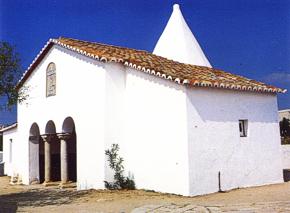
Hermitage of Nossa Senhora da Rocha - Built on a narrow tongue of rock extending into the sea, its origins are lost in time. The hermitage used to be surrounded by an old coastal defence fort (built in the 15th century) which was destroyed by the earthquake of 1755.
Carvoeiro
It is a long time since the fishermen readied their nets for the fray and set off from Carvoeiro beach in their boats to hunt for tuna. But the houses still curve around over the port where the colourful fishing boats chug back and forth and the fishermen continue to eke out a living as they have done since time immemorial. Today's Carvoeiro is also an international tourist resort. Perched on the top of a cliff are the vestiges of the walls of the fort of Nossa Senhora da Conceição (17th century). Inside lies the hermitage of Nossa Senhora da Encarnação, revered by fishermen.
Nearby are the rock formations of Algar Seco - strange shapes and profiles sculpted by the wind and sea, and the romantic Lovers' Balcony. On days when the tide is high, the sea turns the many fissures and hollows into booming organ pipes.