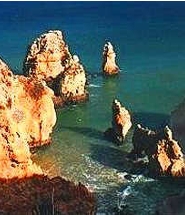
Lagos is a historic port city in the western Algarve, renowned for its role in Portugal's Age of Discoveries and its spectacular coastline of golden cliffs and hidden coves.
The city's ancient name — Lacobriga — indicates Celtic origins dating back to approximately 2,000 years B.C. For centuries it was a port visited by Phoenicians, and during the Roman occupation the city prospered and grew. In the 10th century the Arabs built a double ring of ramparts, but this was not enough to stop the Christians conquering the city in 1249.
The 15th century was a golden age for Lagos. For 40 years, thanks to its location across the sea from Africa, the city became a port of departure and arrival for the vessels that set off year after year on voyages of discovery along the African coast. A centre for trade in iron, gold, silver and other exotic merchandise brought back from Africa, Lagos attracted merchants and bankers, Portuguese and foreign alike, and poured its wealth into new churches and sumptuous houses.
New city walls, built in the 16th century, marked the urban expansion of the city, which from 1573 was an episcopal see and residence of the governors of the Algarve. The earthquake of 1755 and the tidal wave that followed destroyed much of the city, which only began to recover some of its former prosperity in the mid 19th century. Today Lagos is a bustling city, proud of its past.
Historic Landmarks
Governor's Castle (Castelo dos Governadores)
Of Arab construction and possibly once a fortress, this building was altered on many subsequent occasions. During the 16th and 17th centuries it was the residence of the Governors and Captain Generals of the Algarve.
The facade includes a window in Manueline style where tradition has it King Sebastião heard mass before setting off for the fateful Battle of Alcácer-Quibir in 1578. In the garden there is a panel evoking this battle by the sculptor João Cutileiro, and a sculpture which is an allusion to the navigator Gil Eanes.
Fort of the Banner's Promontory (Forte da Ponta da Bandeira)
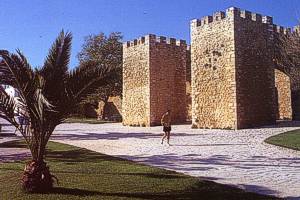
Also known as Forte do Pau da Bandeira, this 18th century defensive construction features a moat and drawbridge. Situated near the Bensafrim stream and the sea, the small strip of sand where it was built witnessed the first slave markets in an age when the Portuguese were engaging in their first maritime adventures under the guidance of Henry the Navigator.
Today the place is used to celebrate one of the most traditional festivities of Lagos: the Banho 29 (Bath 29). Considered purifying in ancient times, the local population would travel to bathe in the sea at midnight on the 29th of August.
Marina de Lagos
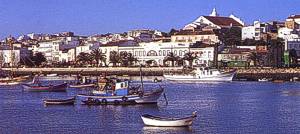
On the other side of the pedestrian bridge that opens to let sailing vessels with tall masts pass through, the Marina invites you to enjoy the peaceful scenery of boats anchored in front of the esplanades. The marina is a modern facility offering berths for visiting yachts and a pleasant waterfront area with restaurants and cafés.
Museums
Regional Museum (Museu Municipal Dr. José Formosinho)
Attached to the Church of St. Anthony, this museum boasts an important collection of religious art works, with paintings from the 17th and 18th centuries. The museum also houses archaeological finds from the region, including Roman mosaics and artefacts from the Age of Discoveries.
Churches
Church of St. Anthony (Igreja de Santo António)
Next to the Regional Museum, the Igreja de Santo António is one of the town's most remarkable ex-libris. The building was probably erected during the reign of João V, but was reconstructed after the 1755 earthquake by the commander of Lagos's Infantry Regiment.
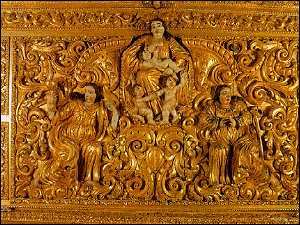
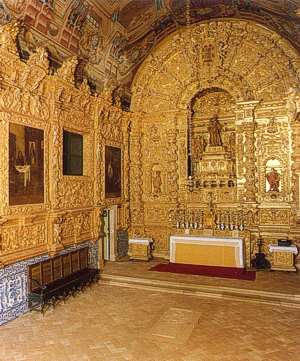
The interior is renowned for its exuberant Baroque gilded woodwork (talha dourada), considered among the finest in Portugal, with intricate carvings covering the walls and ceiling.
Church of St. Sebastian (Igreja de São Sebastião)
Built on the site where there once stood the Chapel of Our Lady of Conception, it was transformed into a church in the 15th century. It was enlarged and reconstructed after the 1755 earthquake.
The Igreja de São Sebastião stands on a high zone of the city and has a great bell-tower with a clock. Inside there is a tall ceiling and three naves separated by Doric pillars. There are also side chapels, a Chapel of Bones, and a gilded wood altar whose Crucifix is said to have been taken to the Battle of Alcácer-Quibir. The church has been declared a National Monument.
Church of Carmo (Igreja do Carmo)
Part of a former monastery from the 16th century, the Igreja do Carmo displays harmonious proportions. The building is now partially in ruins but remains an evocative reminder of the religious architecture of the period.
Church of Santa Maria (Igreja de Santa Maria)
This building, which has a symmetrical facade, dates back to the 15th/16th century. Its main doorway has Doric columns and busts of São Pedro and São Paulo on either side of the archivolt. The side doorway is dated 1568.
Beaches & Natural Attractions
Ponta da Piedade
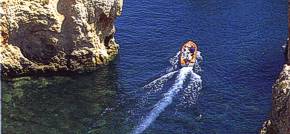
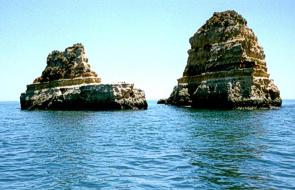
Just south of Lagos, Ponta da Piedade is one of the Algarve's most spectacular natural attractions. Towering golden cliffs rise from crystal-clear waters, with sea caves, grottos and rock arches sculpted by millennia of erosion. Boat trips from Lagos marina offer an unforgettable way to explore the caves and hidden coves.
Praia Dona Ana
One of the most photographed beaches in the Algarve, Praia Dona Ana features golden sand sheltered by dramatic ochre-coloured cliffs. The beach has excellent facilities and calm, clear waters ideal for swimming.
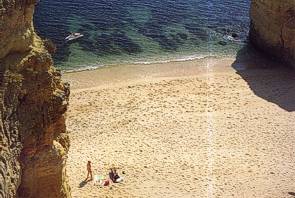
Meia Praia
Meia Praia is the longest beach in the Lagos area, stretching for over 4 kilometres along the eastern side of the bay. With its wide expanse of golden sand, it's ideal for long walks and water sports.
Practical Information
Getting There: Lagos is approximately 90 km west of Faro. The town is served by the Lagos railway station on the Algarve regional line (via Tunes), with regular connections from Faro and Lisbon. By road, take the A22 (Via do Infante) motorway.
Marina: Lagos Marina offers modern facilities for visiting yachts and is a departure point for boat trips to the grottos and caves of Ponta da Piedade.
Best Time to Visit: The beaches are busiest in July and August. Spring and autumn offer pleasant weather with fewer crowds, ideal for exploring the historic centre and walking the coastal paths.