About Nazare
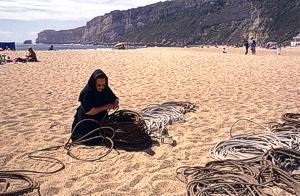
Possibly the most famous fishing town in Portugal, Nazare is unique in many ways. It doesn't contain the architectural treasures or grandiose monuments prevalent in other Portuguese towns, but it has an atmosphere of times gone by and traditions which continue to thrive.
The wooden fishing boats still used today are colourful and narrow with curved prows and decoration evocative of the first fishermen of the area - the Phoenicians, who settled here in pre-Christian times. On some prows you'll still see a watchful eye painted - in theory to detect the two most important things to a fisherman: shoals and storms - and many dangle lamps for fishing after sunset.
In recent years, Nazare has gained worldwide fame for its giant waves at Praia do Norte, where surfers have ridden record-breaking waves reaching over 30 metres in height.
Exploring Nazare
The Three Districts
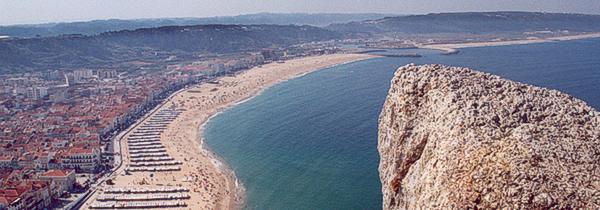
Nazare is split into three main districts - Praia (beach), Pederneira, and Sitio.
Sitio
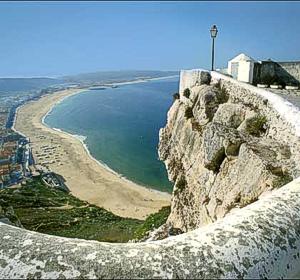
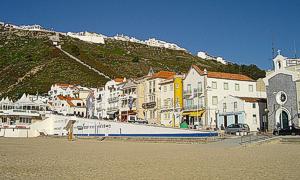
Located on a rocky promontory over 100 metres above the main part of town, Sitio provides wonderful views over the bay and beach of Nazare. From here, walkers can continue northward along stretches of beach where the Atlantic regularly pounds, creating ideal conditions for shore fishing.
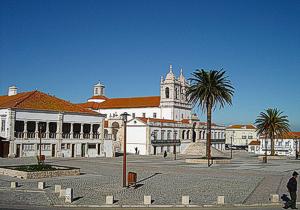
Although accessible by car, by far more interesting is the funicular carriage which takes passengers up the sharp slope for a small fee. A winding path also exists but is perhaps more appealing on the way down! Once at the top, besides the views, you'll find a large church and a small chapel clinging to the edge of the sheer drop.
The Legend of Sitio
Ermida da Memoria
This small chapel clings to the edge of the cliff, its origins closely connected to the miraculous appearance of the Virgin Mary. The legend tells that one misty morning in 1182, local nobleman Dom Fuas Roupinho was hunting when he realised at the last moment that he had chased his deer to the very edge of the cliff.
Just as he too was about to fall to his death, he cried out to Our Lady of Nazare who appeared before him and halted his horse. In honour of this life-saving miracle, Roupinho ordered a chapel to be built. Today, visitors can still see the tale depicted in hand-painted azulejos and even the supposed footprint of Roupinho's horse engraved in a stone found in the crypt below the chapel.
Beach Life
Along the seafront of Nazare, people still dry their catch of fish in the sun and mend their boats alongside sunbathing holidaymakers and playful children enjoying the beach. A throng of craft shops and cafes stretches the length of the Avenida Marginal, as well as restaurants serving fresh seafood.
Casa Museu do Pescador
Located on Rua Sousa Lobo, this small museum is dedicated to the fishing population of Nazare. Contained within a traditional cottage, it has been lovingly restored to show the exterior and interior of a typical fishing family's home from the early 20th century.
Local Gastronomy
Fresh fish is, of course, the local speciality. Caldeirada a Nazarena is a rich fish-based stew typical of the area, and fresh ingredients feature strongly on menus often offering the "catch of the day". The many restaurants along the seafront serve a great variety of seafood dishes.
Getting There
By Car
Nazare is located on the Silver Coast, approximately 120 km north of Lisbon via the A8 motorway.
Big Wave Season
The famous giant waves at Praia do Norte occur mainly between October and March, when North Atlantic swells combine with the underwater Nazare Canyon to create record-breaking waves.