About Olhão
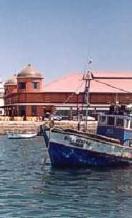
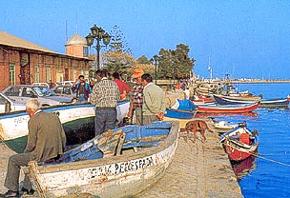
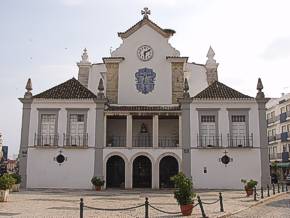
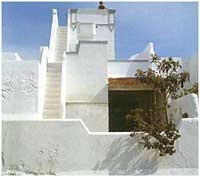
One of the Algarve's main fishing ports, Olhão has square whitewashed houses with flat roof terraces and chimneys that are evocative of Moorish architecture. Behind the parish church of Nossa Senhora do Rosário, from the 17th century, the chapel of Nossa Senhora dos Aflitos is where the wives of fishermen gather to pray for their safety when the weather is stormy.
But the town's main attraction is its market, one of the most animated and picturesque of the Algarve, with an enormous variety of seafood but also local farmers selling such products as fruit, honey and live chickens.
A few kilometres inland, Moncarapacho is proud of its church of Santo Cristo, with a beautiful doorway and painted arches. In the region, the Parque Natural da Ria Formosa is considered the most important sanctuary of wildlife in the Algarve.
History
The town of Olhão is essentially and historically linked to the local fishing industry and only grew into existence in the 17th century. It has about 30,000 inhabitants and was raised to the status of a town in 1808 after 17 local fishermen successfully crossed the Atlantic Ocean without charts in their small fishing boat "Bom Sucesso". Their purpose was to announce to the exiled King of Portugal, Dom João VI, that the French invading armies had been defeated and had returned to France leaving Portugal free for the King to return.
It was in this town in 1882 that the first canning factory for tuna and sardines was established. Very soon canning became the leading industry of the Algarve.
Sightseeing in Olhão
Chapel of Our Lady of Solitude
An example of rural architecture, this was originally the place of worship chosen by seamen. Its construction dates from the 17th century and the altar retables are from the 18th century.
Holy Spirit Chapel (Capela do Espírito Santo)
Site of religious pilgrimages during the 17th and 18th centuries, the Capela do Espírito Santo can boast of a vast and significant patrimony from that period. Of simple architecture in the Baroque style, the colourful tiles from the 17th century and paintings representing the Heart of Jesus and the Nativity (from the same period) are its most outstanding features. Next to the chapel is the Museu Paroquial de Moncarapacho, the parish museum.
Our Lady of the Rosary Mother Church (Igreja Matriz)
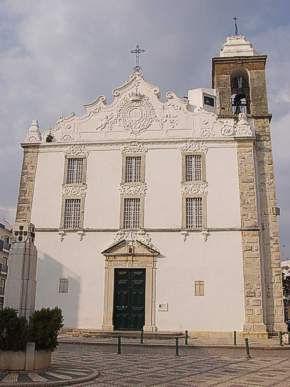
The solid Igreja Matriz stands at the Praça da Restauração. Built in the 17th century with donations made by the fishermen, it is also known for having been the first stone building of the city. The Baroque façade, richly decorated with volutes, exhibits a shield on the fronton, flanked by two angels. To the left, the bell-tower dominates the building, rising outlined against the sky.
Marim Cottage (Chalé de Marim)
Poet, musician and painter, João Lúcio is a charismatic figure of Olhão, always associated with the Chalé de Marim (or Chalé Dr. João Lúcio). He built it in 1916, at the Quinta do Marim, in a pine wood by the sea, two years before he died.
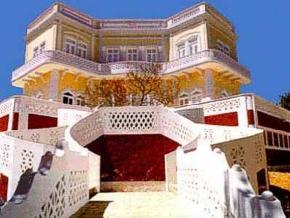
Museu Paroquial de Moncarapacho
Next to the Holy Spirit Chapel, the Museu Paroquial owes much to the efforts made by Father Isidoro Domingos da Silva, who collected items representative of the local ethnography. It also displays important archaeological findings and a religious collection from the 16th to the 18th century.
Villages in the Municipality
Moncarapacho
From Olhão to Moncarapacho the distance is short (about 5 km by the Estrada Nacional 398); by the IP1 road, the distance is even shorter. This agreeable village lies between orchards, carob trees and almond trees.
Mother Church of Moncarapacho - Although of small dimensions, the Igreja Matriz of Moncarapacho embellishes extraordinarily this small town. Its portal, with Roman and Gothic motifs, is considered one of the finest examples of the Renaissance style in all the Algarve (16th century). The interior is richly decorated with carved woodwork.
Fuzeta
Born of the sand and the sea, Fuzeta is a fishermen's village near Olhão, and can be reached by the Estrada Nacional 125. Its whitewashed and square-shaped houses, typical of the district, stretch almost until the sea, with flat roof terraces exhibiting tall lattice chimneys.
Legend of Our Lady of Carmo - The Mother Church of Fuzeta deserves undoubtedly a careful visit after knowing the legend of Nossa Senhora do Carmo. Local people tell that many years ago, a violent storm arose when fishermen were still working far away at sea. On land, the desperate women made an enormous fire to guide the fishermen home safely.
The Islands and Beaches
Fuzeta and Armona are the islands situated close to Olhão and can be quickly reached by boats that make regular trips, especially during summer.
They are long bars of fine sand and warm waters which offer both peace and quiet in the less visited zones, and more exciting water activities: canoeing, windsurf, sailing and diving are backed by excellent local services. Lying within the limits of the Ria Formosa Natural Park, these islands offer the best natural conditions to practice such activities, and Olhão is therefore one of the most visited towns of the Algarve by water sports enthusiasts.
Armona has a camping park. Further away, but also in the Ria Formosa and easily reached by boat, the islands of Culatra, Farol (Lighthouse) and Deserta (Deserted) are strips of sand that stretch along the coast and invite visitors to enjoy sun-baths and swimming. They are paradisiacal places, where the sun rises and sets each day wrapped in magical shades of fire.
Ria Formosa Natural Park
The Parque Natural da Ria Formosa is considered the most important sanctuary of wildlife in the Algarve. Its lagoons, marshes, channels and islets are abundant in shellfish such as cockles, clams and oysters and shelter, amongst other species, a variety of birds such as the cattle egret, the white stork, the purple gallinule, the red-crested pochard, and many more.
This natural reserve stretches along 60 kilometres and its rich ecosystem is ideal for the development of varied fauna and flora.
Practical Information
Getting There
By Car: Olhão is approximately 8 km east of Faro via the N125 or A22 motorway.
By Bus: Regular bus services connect Olhão with Faro and other Algarve towns.
By Train: Olhão has a train station on the Algarve railway line.
Markets
The Olhão fish and produce market is housed in two distinctive red-brick buildings by the waterfront. It is one of the most authentic and vibrant markets in the Algarve, especially lively on Saturday mornings.
Boat Trips
Regular ferries depart from the Olhão waterfront to the barrier islands of Armona, Culatra, Farol and Fuzeta. During summer, services are frequent; in winter, boats run less often.