About Portimão
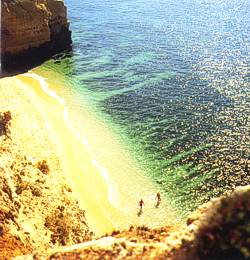
First the blue sea and its gentle lapping waves. Then fine golden sands framed by cliffs and rocks. The cosmopolitan atmosphere of an international tourist destination. This is the Algarve of beach holidays in the sun.
Portimão and its municipality have more to offer though. A rich heritage of historical monuments. The eternal natural beauty of the Ria de Alvor. The charm of cultivated fields, slopes covered with pine trees and wild flowers. The allure of walking into the hills and looking down on the Algarve from a new perspective.
History
Proof of human presence in the locality since the Neolithic period is furnished by the extensive burial grounds at Alcalar and Monte Canelas and by other archaeological finds scattered across the municipality. The recent discovery at Vila Velha de Alvor of remains from a village dating from the 2nd or 3rd century BC, and maritime artifacts recovered from the Arade river, throw new light on the importance of the region during the period when Atlantic trade routes with the Mediterranean and North Africa were developing, following the emergence of Phoenician, Greek and Carthaginian factories.
Although theories that variously identify Portimão with Portus Hannibalis, Portus Magnus and Porcimunt remain controversial, there can be no doubt about the Roman presence in the city. Amphorae, coins, fish-salting tanks, bronze objects, cisterns, building materials, and the major villa site at Abicada bear eloquent witness to this fact.
Modern Portimão came into being in the reign of King Afonso V (1463) with the granting of certain privileges to a settlement which would come to be called Vila Nova de Portimão. The earthquake of 1755 destroyed much of the town and prompted an economic decline that was reversed only towards the end of the 19th century by the return of trade, exports of dried fruit, milling, fishing and the fish-canning industry. Portimão was made a city in 1924 by the then President of the Republic, the writer Manuel Teixeira Gomes, himself a native son of Portimão.
The City
The white contour of a church on a hilltop. Narrow streets of the old fishermen and tradesmen quarter. These aspects identify the character of this city, old of many centuries. The presence of the sea, the immense beach known as Praia da Rocha.
Church of Nossa Senhora da Conceição
Situated on a hilltop, this church has for centuries been a distinctive feature of the city skyline. First built in the 15th century, it was rebuilt in the 18th and extensively renovated in the 19th. Of the original structure all that remains is a fine gothic doorway with decorated capitals, a gargoyle and buttresses. The interior consists of three naves. On the high altar is an impressive carved and gilded retable with baroque decoration. Among the various statues, that of St. Peter the Apostle (16th century) stands out, along with four crucifixes made of ivory and lignum vitae. There are fonts in the Manueline style (16th century) and an ashlar of glazed tiles of diverse origin (17th century).
Jesuit College
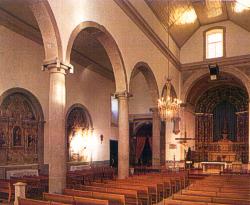
This austere and majestic edifice was built on the orders of Diogo Gonçalves, a nobleman who made his fortune in the Far East and is buried in a tomb made of various marble types inside the church. Construction continued from 1660 to 1707 and the church needed major repairs after the earthquake of 1755. The church, the biggest in the Algarve, consists of a single nave like a large hall. The high altar and lateral altars contain gilded carvings (beginning of the 18th century) with a Renaissance statue of the Virgin and Child (16th century). The side altars contain a statue of Nossa Senhora da Piedade and a crucifixion of Senhor Jesus dos Milagres.
Monastery of São Francisco
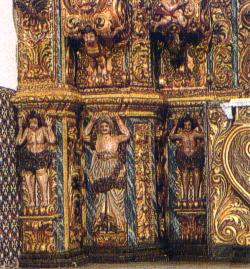
Built in the 16th century, the monastery was severely damaged in the 1755 earthquake and again in a fire in 1884. Now abandoned, the church, cloister and chapter house nonetheless display interesting architectural features.
Chapel of São José
This building, with its plain façade and curved pediment, is located in the old part of the city, opposite the naval shipyards and the Largo da Barra, where the ferry across the river would dock in the days before the bridge was built.
The Old Town
All that is left of medieval Portimão are a few stretches of the city wall now hidden by houses. The old town is dominated by the architecture of the late 19th and early 20th centuries: houses on two storeys with wrought iron balconies and ornate stonework around windows and doors, decorated with balustrades of stone and ceramics and walls covered with tiles. The old palace of the Viscounts of Bivar (18th century), a building of fine classical lines, is now home to the municipal council.
To savour the spirit of Portimão there is nothing better than to sit in the shade of the trees in the Manuel Bivar gardens, watch the fishing boats and pleasure craft motor past, and walk through streets and squares that exude the ambiance of an active, hard-working town.
Getting to Know the Municipality
Mexilhoeira Grande
An old village, traditionally sustained by agriculture and by the resources of the Ria de Alvor.
Main Church - This church is in the Renaissance style (16th century) but has two side doors that are Manueline. The main doorway is extremely solemn, with a triangular pediment. The interior consists of three naves, held up by columns with ornate bases and capitals. The triumphal arch is decorated with motifs from the world of nature and a coat of arms. There is a panel depicting the Assumption on the high altar. The Capela do Santíssimo boasts a high relief showing the figure of the Eternal Father and a low relief of St. Peter and St. Paul.
Ria de Alvor
To one side the sea, to the other the liquid mirror of the vast estuary stretching inland, and between them a long, broad dune. This beautiful setting is the chosen nesting place of dozens of species of migratory birds. The salt marshes support an interesting variety of animal life, while local fishermen still use traditional techniques to catch fish and gather shellfish. To explore this almost unknown facet of the Algarve by the diffuse light of dawn is to discover a world of total calm and make memories that will last forever. Boats can be hired at Alvor.
Abicada
A Roman archaeological site at the confluence of two rivers. There is a 1st/4th century villa with several rooms and a peristyle decorated with coloured mosaics bearing geometric patterns and stylised designs.
Alcalar
An important Neolithic/Chalcolithic burial ground (2,000-1,600 BC) with graves of several types, from megalithic chambers to tombs with false cupolas and side alcoves. There is another burial ground nearby at Monte Canelas.
Alvor
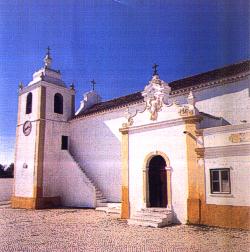
This town's long history is clear from the discovery on Vila Velha hill, overlooking the Ria de Alvor, of a Neolithic village retaining traces of subsequent Roman occupation. During Moorish rule, Alvor was a thriving port. The ramparts defending it were the scene of violent fighting when King Sancho I conquered it in 1189, with the help of Crusaders en route to the Holy Land. Retaken by the Moors in 1191, it was only returned to Christian dominion in 1250. The town walls were rebuilt in 1300 and King João II died here in 1495.
Main Church - Built in the 16th century, rebuilt in the 18th. The profusely decorated main doorway - one of the most beautiful in the Algarve - and the side door are in the Manueline style. The carved retable on the high altar, with its impressive life-size statue of the Lord Jesus, is from the 18th century. The church contains polychrome tiles with 18th century figurative panels - the Washing of the Feet and the Last Supper.
Castle - The castle has long disappeared but for two stretches of wall that were once part of the fortress.
Marabout Chapels of São João and São Pedro - Cubic structures with spherical cupolas that testify to the Moorish influence, these chapels evoke the holy places where Muslims would bury religious ascetics known as marabouts.
The Arade Estuary
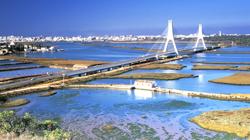
For thousands of years, Phoenicians, Greeks, Carthaginians, Romans, Moors, Normans and Crusaders sailed up the river towards the city of Silves, intent on trade or conquest. Visitors today can take the same course in a boat hired from Portimão. The shady groves along the banks make good places to stop off and relax, as does the island of Nossa Senhora do Rosário, where the ruins of an old chapel are still to be seen.
Beaches
Alvor - A long beach that extends as far as the eye can see, until it reaches the Ria de Alvor estuary. An international tourism centre.
Três Irmãos and Prainha - A series of tiny beaches separated by outcrops of ochre rock in which the sea has worn tunnels that offer an unusual means of access.
João de Arens - A small stretch of sand set among cliffs, rocks and islands, associated with a fearless shepherd immortalised by the writer Manuel Teixeira Gomes in his book "Agosto Azul" (Blue August).
Vau - A charming beach flanked by cliffs. Its calm atmosphere, iodine-rich waters and fascinating rock formations make it popular with families.
Praia da Rocha - Perhaps the most famous resort in the area, with dramatic rock formations and golden sands.
Golf
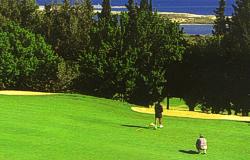
Palmares - A course of great beauty, perfectly blending beach and mountain scenery.
Penina - The first golf course built in the Algarve, considered the masterpiece of Sir Henry Cotton.
Morgado do Reguengo - One of the newer courses in the Algarve, laid out in a large 980 hectare estate through undulating terrain.
Alto Golf - Runs through two valleys and was the last course designed by Sir Henry Cotton.
Activities
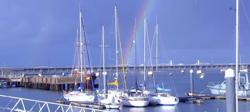
Portimão is one of the main big game fishing centres in the Algarve, offering the chance to catch fighting swordfish and other big fish. There are also facilities for sailing, windsurfing, parasailing, water-skiing and scuba diving.
Practical Information
Getting There
By Car: Portimão is approximately 65 km west of Faro via the A22 motorway or the coastal N125.
By Bus: Regular bus services connect Portimão with Faro, Lagos, and Lisbon.
By Train: The Algarve railway line connects Portimão with other coastal towns.
Best Time to Visit
The Algarve enjoys over 300 days of sunshine per year. Summer (June-September) is best for beach holidays, while spring and autumn are ideal for golf and sightseeing.