About Viana do Castelo
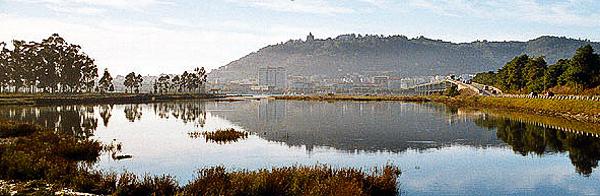
Set in beautiful scenery between the estuary of the River Lima and the sea, Viana do Castelo nestles against the Santa Luzia hill in one of Portugal's most picturesque locations.
Crossed by winding streets and picturesque squares, its many mansions, monuments and small palaces recall the importance it gained in the 15th century as a fishing centre and provider of ships, sailors and navigators for the Portuguese maritime discoveries of the 16th century.
The city is like a living museum with countless monuments and mansions of different periods and styles. But it is also the capital of rich Minho folklore, with an important handicrafts industry and animated festivals - most notably the Festa da Senhora da Agonia in August, one of Portugal's most distinctive celebrations.
Places of Interest
City Centre
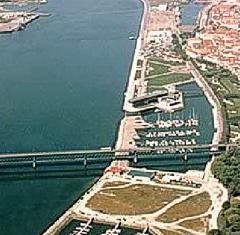
Marina
The small marina is close to the centre of town, just before the old steel bridge built by Eiffel's engineering company.
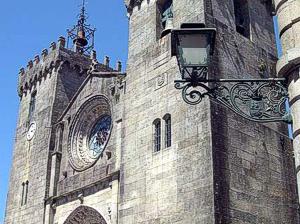
Se Cathedral
Built in the first half of the 15th century and substantially altered in the 19th century. The two crenellated towers flanking the facade are Romanesque. The interior has fine polychrome wood carving, mainly from the 17th century.
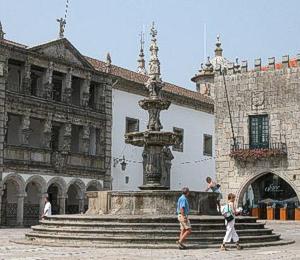
Praca da Republica
Just north of the cathedral is one of the most handsome squares in Portugal. At its heart is the much-photographed Chafariz Fountain, constructed in the 16th century. The most impressive building is the Church of the Misericordia, a unique three-storey structure featuring Roman arches and Renaissance balconies.
The Old Town Hall (Antigos Pacos do Concelho) on the east side is an early 16th century granite building, now used for exhibitions, where bread used to be sold in its street-level arcades.
Santa Luzia
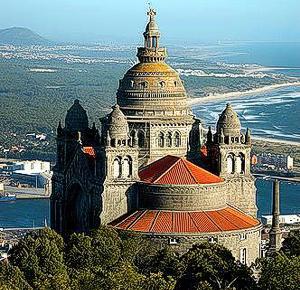
Basilica de Santa Luzia
The Monte de Santa Luzia (250m/820ft) is about 5km northeast of Viana do Castelo, topped by its 19th century Neo-Byzantine church of Santa Luzia, a place of pilgrimage. It can be reached on foot, by car, or by a funicular which leaves from near the station. The trip is worth making if only for the magnificent view over the city, river and coast.
Funicular
The funicular railway takes visitors up to the Santa Luzia Church, offering spectacular views along the way.
Historic Sites
Nossa Senhora da Agonia Chapel
A place of pilgrimage approached by a Baroque flight of steps. Begun in the mid-18th century, the chapel did not have a belfry until the late 19th century. The festival of Senhora da Agonia takes place over three or four days near August 20 - one of Portugal's most distinctive festivals with regional dancing and singing, processions in regional costumes, bull running, carnival parade and fireworks.
Castelo de Sao Tiago da Barra
In the south corner of the broad Campo do Castelo, this fortress was built in the 16th century to defend the harbour. The two towers were added in the 18th century.
Municipal Museum
Housed in the 18th century mansion of the Barbarosa Macieis family, with displays of furniture from Portuguese India (17th century) and Moorish Spain, as well as an important collection of 18th century Portuguese glazed earthenware.
Getting There
By Train
Regular trains connect Viana do Castelo to Porto (about 1.5 hours) along the scenic Linha do Minho coastal route.
By Car
Viana do Castelo is about 75km north of Porto via the A28 coastal motorway. The journey takes approximately 50 minutes.