About Vila do Bispo
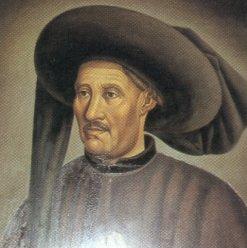
The mythical atmosphere surrounding Sagres and Cabo de Sao Vicente (Cape St. Vincent), places dedicated to the gods for thousands of years. The unspoilt coastline with its dramatic horizons of cliffs and sea. The many menhirs that bear witness to prehistoric rites. Memories of the epic of the Discoveries and the enigmatic figure of Prince Henry the Navigator.
Such are the attractions of Vila do Bispo and its municipality, a vast triangle in which the sea is a constant presence. And where nature combines with history to create a unique region that is worth taking the time to get to know.
History
The human presence in the south-western Algarve goes back at least as far as the Neolithic period. The large number of menhirs - standing alone, in groups or in cromlechs - is one of the most important vestiges of the past to be found in the Vila do Bispo area.
The religious importance of Cape St. Vincent persisted in the Middle Ages with the pilgrimages that were made - even during the centuries of Arab rule - to the burial place of Sao Vicente (St. Vincent).
In the 15th century, the presence of Prince Henry the Navigator at Sagres and the undertaking known as the Discoveries ensured Vila do Bispo a prominent place in history.
Identified by some authors as the site of the then famous Igreja dos Corvos (Church of Crows) mentioned by Arabic chroniclers, Vila do Bispo has its origins in a village which was bequeathed to the Algarve Diocese at the beginning of the 16th century and was elevated to the status of a town in 1633.
Beaches
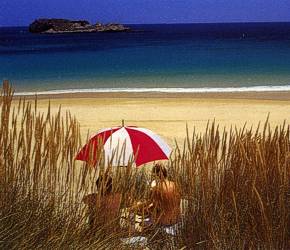
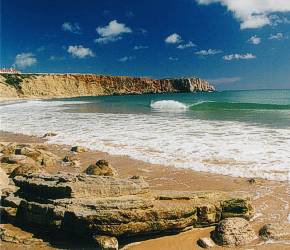
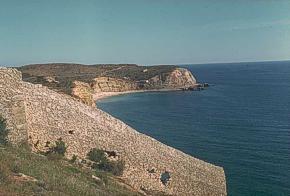
The coast which extends to the north and east of Cape St. Vincent is dotted with more than 20 beaches. Some are sandy coves hidden at the foot of cliffs, others broad expanses of sand that stretch away to the horizon.
Murracao - A small beach with a broad stretch of sand.
Mouranitos, Barriga and Cordoama - A series of broad beaches separated by cliffs but with access between them. Very quiet.
Castelejo - A beach surrounded by rock formations. Tourist facilities.
Telheiro - Pleasant sheltered beach.
Tonel - A sheltered beach with good views of Ponta de Sagres and Cape St. Vincent.
Mareta & Baleeira - Long beaches. Tourist facilities. Starting point for discovering the underwater delights of a coast dotted with caves.
Martinhal & Rebolinhos - Long beaches surrounded by a broad bay. Scenic islets opposite the beach.
Barranco, Ingrina & Zavial - Sandy coves on the edge of little bays. Calm. Tourist facilities.
Salema - Located in a picturesque fishing village. Pleasant beach. Tourist facilities.
Boca do Rio - Stretch of sand along the bottom of a valley crossed by gentle streams.
Burgau - A typical fishing port looking out on the sea. Calm and family oriented.
Golf
Parque da Floresta
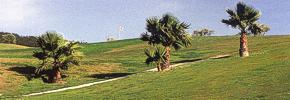
A course built on hillsides and over uneven ground with views over a fishing village. With a number of different obstacles such as bunkers, lakes and rivers, it provides challenge of great diversity.
Vila do Bispo
The windmills which recorded the fact that for centuries Vila do Bispo was the breadbasket of the Algarve have disappeared. What remains, however, is the charm of whitewashed houses scattered down the slopes of a hill crowned by the looming bulk of a church tower.
Historical Centre
The narrow streets which surround the main church contain many houses typical of the old Algarve, with whitewashed walls, bands of bright colour, carved stonework around doors and windows and cool shade even in the dog days.
Main Church
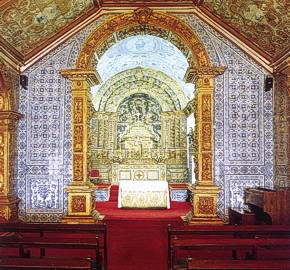
The facade is typical of the art of the 18th century, with a doorway surmounted by an eye window and a curved pediment. The central nave is covered with blue tiles depicting jars and dolphins, dating from 1726. On the carved gilt retable of the main altar (18th century) is a statue of Nossa Senhora da Conceicao (beginning of the 16th century). Attached to the church is a museum containing interesting works of religious art.
Sagres
Dates back to before the Roman conquest. The frequent presence of Prince Henry the Navigator during the first days of Atlantic navigation and the discovery of the African coast as far as the Gulf of Guinea has forever linked this picturesque fishing port with the Discoveries.
Vila do Infante and its fortress were founded by Prince Henry and sacked and destroyed by Sir Francis Drake in 1587, after his attack on Cadiz. On Ponta de Sagres, a giant finger of rock pointing to the ocean, stand buildings which evoke the past of a place that is part of the history of the world.
Fortress
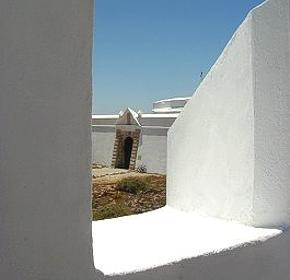
Dating back to the 15th century, and successively rebuilt and repaired in the 16th, 17th and 18th centuries. Adjoined by former batteries that defended the beaches of Tonel and Mareta.
Church of Nossa Senhora da Graca
Tradition has it that this church was founded by Prince Henry the Navigator. Built in the 16th century with a Renaissance doorway. On the altar there is an interesting depiction of Sao Vicente holding a ship (17th century).
Wind Rose
A vast circle with radiating points, 143 feet in diameter, marked out in stone on the ground. Possibly dating back to the 15th century.
Panoramic Circuit
One of the charms of Ponta de Sagres are the broad horizons and varied views of the coast provided by the paths cut along the cliffs, from which the sea has gouged huge caverns and hollows.
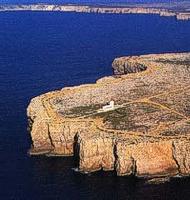
Cape St. Vincent (Cabo de Sao Vicente)
Its status as a sacred spot since Neolithic times is confirmed by the presence of important groups of menhirs and by an account written by Greek authors in the 4th century BC, describing religious ceremonies involving libations and stating that it was forbidden for humans to go there after dark, because at night it was inhabited by gods.
In the period when the Phoenicians had factories in the Algarve, there was a sanctuary dedicated to the solar divinities Hercules-Melcart while in Sagres there was another under the invocation of Cronos-Saturn-Baal.
For the Romans the whole area was part of the Promontorium Sacrum (from which the name Sagres is derived), the most westerly point of the world, where the setting sun made the waters of the ocean boil.
The transportation, after the Arab invasion, of St. Vincent's body to the cape that was named after him turned it into a place of pilgrimage for centuries. An obligatory landmark for any ship travelling to the Mediterranean, Cape St. Vincent has been the scene of many major sea battles.
Fortress
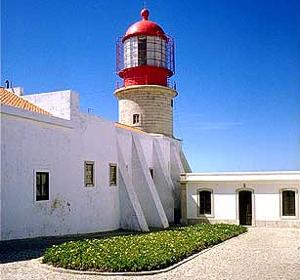
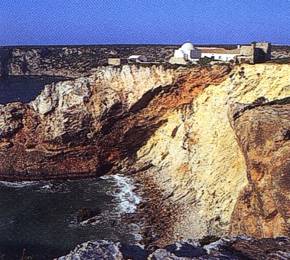
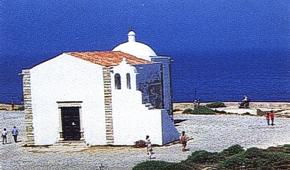
The fortress was built in the 16th century and rebuilt in the 17th and 18th centuries. Inside is found the former monastery of Hieronymite friars, founded in the 16th century, and a chapel dating back to the 14th century, built on what is traditionally said to be the site of St. Vincent's grave. The curious lighthouse at the extremity of the Cape was built for the safety of shipping in 1515.
Villages
Budens
A village with picturesque streets, an antique fountain and tank for washing clothes. Nearby stand abandoned windmills and a typical lime kiln. The Main Church (18th century) has carved and gilded altars and an interesting effigy of Nossa Senhora do Rosario (17th century).
Raposeira
One of the places in the south-western Algarve where Prince Henry the Navigator lived. Tradition says he stayed in a house which has now lost its original character. There are several houses with 15th and 16th century doors. The Hermitage of Nossa Senhora de Guadalupe was, according to local tradition, a place of prayer for Prince Henry.
Barao de Sao Miguel
A typical village surrounded by rolling hills covered with cistus. The Main Church has a Baroque retable with effigy of the Arcanjo Sao Miguel (18th century).
Archaeological Treasures
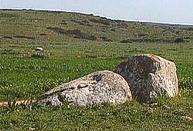
The existence of veins of flint in the Vila do Bispo area, along with opportunities for finding food among the rich marine fauna, must have been one of the reasons for the first human settlements. The most interesting testimony to the past are the numerous menhirs (4,000 to 3,000 BC). Hewn out of white limestone, usually conical in shape, and sometimes bearing decoration carved in relief, they are reminders of ancient cults linked to fertility and the dead.
Vila do Bispo - Marmeleiro (3 menhirs in a row), Pedra Escorregadia (3 decorated menhirs and a collective grave), Amantes (many menhirs from 2 cromlechs).
Budens - Boca do Rio (an important Roman villa with frescoes and mosaics, bathhouse, and a fish salting factory).
Raposeira - Milrei (group of 21 menhirs, some decorated), Padrao (group of 15 menhirs).
Sagres - Praia do Martinhal (a major Roman pottery centre with 3 kilns).
Gastronomy
Sea on two sides, land on one. The cooking typical of Vila do Bispo reflects this dual influence in dinners of chickpeas and boiled cabbage flavoured with cured meats, in the presence of corn flour in maize-meal with sardines, in delicious fish dishes: conger risotto, baked dory or sea bream, fish stews, fried moray sandwiches.
Shellfish in Vila do Bispo is always tempting, such as barnacles and whelks harvested from the rocks or the lobsters that the boats bring in at dawn. Sagres honey cake is what the Vila do Bispo area has to offer those who appreciate something sweet.
Lodging
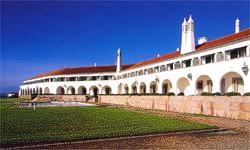
Pousada Infante
Overlooking the Atlantic Ocean, the Pousada is located in the village of Sagres. This village has an important historical and maritime significance, from where, 500 years ago, Prince Henry's caravels left to look for new countries. The Pousada features 38 Rooms, 1 Suite, Swimming Pool, Tennis courts and Meeting rooms.