About Evora
A stunning open-air museum of Portuguese history - Evora is a UNESCO World Heritage Site where Roman, Moorish, and medieval Christian civilizations have left their indelible marks.
The capital of the Alentejo region, Evora reached its golden age during the 15th and 16th centuries when Portuguese kings made it their residence. The city's historic centre, enclosed within medieval walls, preserves an extraordinary ensemble of monuments spanning two millennia - from the Roman Temple of Diana to Renaissance palaces and Baroque churches.
Walking through Evora's cobbled streets is like traveling through time: you'll encounter Gothic cloisters, Manueline doorways, whitewashed houses with wrought-iron balconies, and hidden squares where history seems to pause.
Major Landmarks
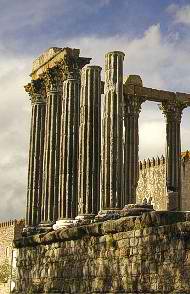
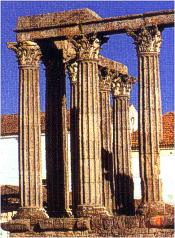
Roman Temple (Templo de Diana)
The iconic symbol of Evora, this 2nd-century AD Roman temple features elegant Corinthian columns that have survived remarkably intact. Once part of the forum dedicated to Emperor Augustus, the temple was later enclosed within a medieval castle wall - ironically, this helped preserve it through the centuries.
Se Cathedral
Built between 1186 and 1204 in Romanesque-Gothic style, Evora's fortress-like cathedral is one of Portugal's most important medieval buildings. Its asymmetrical towers, rose window, and 14th-century cloister are highlights. The Sacred Art Museum above the nave houses a superb collection of religious treasures.
Church of Sao Francisco & Chapel of Bones
The late Gothic Church of Sao Francisco contains the macabre Capela dos Ossos (Chapel of Bones), whose walls and pillars are entirely covered with human bones and skulls - the remains of some 5,000 monks. A inscription at the entrance reads: "We bones that are here await yours."
University of Evora
Founded in 1559 by Cardinal King Henrique as a Jesuit college, this was Portugal's second university. The beautiful Renaissance cloisters, decorated with azulejo tiles depicting subjects taught here, surround classrooms still in use today.
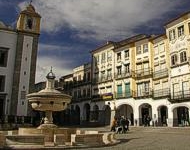
Praca do Giraldo
The heart of Evora since medieval times, this elegant square is named after Geraldo Sem Pavor (Gerald the Fearless), who reconquered the city from the Moors in 1165. The 16th-century marble fountain and arcade of shops beneath Renaissance buildings make this the perfect place to experience Alentejan life.
Agua de Prata Aqueduct
This impressive 16th-century aqueduct, commissioned by King Joao III, stretches for 8 km to bring water to the city. Its massive arches march across the landscape, and within the city walls, houses have been built into the aqueduct's arches - a unique urban adaptation.
Palaces and Mansions
Evora boasts numerous noble residences: the Palace of the Dukes of Cadaval, incorporating a medieval tower; the Palace of the Counts of Basto, blending Gothic, Manueline, and Renaissance styles; and the Convent of Sao Joao Evangelista (now the Pousada de Loios), with its stunning azulejo panels.
Practical Information
Getting There
Evora is 130 km east of Lisbon, accessible by car via the A6 motorway (about 1.5 hours) or by bus from Lisbon's Sete Rios terminal (approximately 1 hour 45 minutes). There is no direct train service.
Best Time to Visit
Spring (March-May) and autumn (September-November) offer ideal weather. Summers can be very hot, while the Sao Joao festival in late June brings traditional celebrations to the city.
Local Specialties
Alentejo cuisine is hearty and flavorful: try acorda (bread soup with garlic and coriander), migas (fried bread crumbs with pork), roast black pig, and regional cheeses. The area produces excellent wines, including the renowned Cartuxa.
UNESCO Status
Evora's historic centre was inscribed as a UNESCO World Heritage Site in 1986, recognized as an outstanding example of a city from the golden age of Portugal that has preserved its cultural landscape.