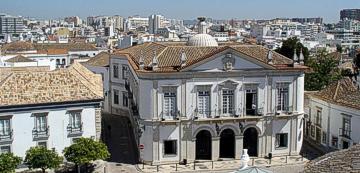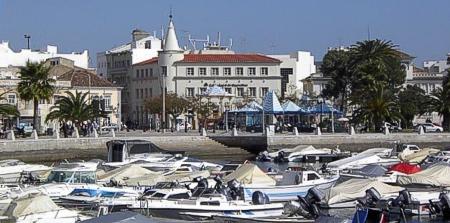
Faro is the capital of the Algarve and the gateway to southern Portugal. This historic city combines a beautifully preserved medieval old town with a vibrant modern centre, all set against the stunning backdrop of the Ria Formosa Natural Park.
Just 5 km from the international airport, Faro offers visitors a chance to explore centuries of history while enjoying easy access to some of the Algarve's most beautiful beaches on the barrier islands of the Ria Formosa lagoon.
Vila Adentro - The Old Town
Passing through the Arco da Vila is like stepping back in time. The Vila Adentro (Old Town), as the locals call it, is partially surrounded by ancient walls where you can still hear echoes of its Moorish past in the cobblestone streets and peaceful squares.
Within these walls lie the city's most important monuments, bearing witness to Roman, Moorish, and Portuguese heritage across the centuries.
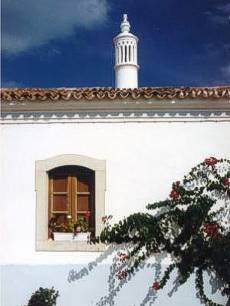
Arco da Vila
This monumental arch, inaugurated in 1812, was built to a design by the Italian architect Francisco Xavier Fabri over one of the medieval gates set into the ramparts. It has a niche with a statue of Saint Thomas Aquinas of Italian origin. The arch marks the main entrance to the historic centre.
Ramparts and Castle
Faro's defensive walls were raised by the Moorish prince Ben Bekr in the 9th century. The two barbican towers which defend the entrance to the Arco do Repouso (Arch of Rest) have their origin in the reinforcement of the city's defences during the 12th/13th centuries. The castle was later adapted for artillery in the 17th century.
Hermitage of Nossa Senhora do Repouso
This small chapel was built in the 18th century inside one of the Moorish arches set into the ramparts, creating a unique fusion of Islamic and Christian architecture.
Cathedral and Churches
Sé Catedral (Cathedral)
Built in the 13th century on the site of a former mosque, the cathedral is one of the Algarve's most important religious monuments. The main chapel boasts a fine retable, throne and two Italian canvasses. The two collateral chapels are among the best examples of baroque carving in the Algarve.
Notable features include:
- Chapel of the Santíssimo Sacramento - Walls and retable decorated with carvings and four 18th-century paintings
- Chapel of the Santo Lenho - Magnificent carvings, important collection of relics, and the tomb of the cathedral's founding bishop (18th century)
- Chapel of Nossa Senhora dos Prazeres - A jewel of baroque art with carvings, inlaid marble, tiles and paintings
- Chapel of Nossa Senhora do Rosário - Carved and gilded altarpiece, figurative tiles from the late 17th century, and two curious 18th-century lamps depicting African figures
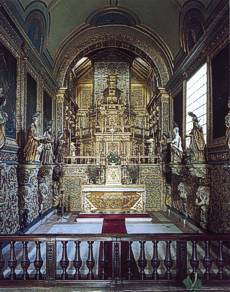
Igreja da Misericórdia (Misericórdia Church)
The church, with its adjoining hospital, was built at the end of the 16th century at the instigation of Bishop Afonso Castelo Branco, over the old Manueline Espírito Santo chapel and hospital. It is the only church in the Algarve built in the form of a Greek cross, believed to have been designed by an architect from Lisbon. The earthquake of 1755 caused extensive damage, prompting Bishop Francisco Gomes to renovate the facade and build a new hospital (1795-1815) to a design by the Italian architect Francisco Xavier Fabri.
Episcopal Palace
One of the Algarve's foremost buildings in the "chã" (plain) architectural style which predominated at the end of the 16th and throughout the 17th century. Partially rebuilt after the earthquake of 1755, the doorway and distinctive pyramid-shaped "tesouro" roofs create an interesting contrast with the strict geometric lines of the facade. The walls of the atrium, stairway and three display rooms are clad with important rocaille tile decoration from the third quarter of the 18th century. Access is restricted.
Igreja da Ordem Terceira de São Francisco
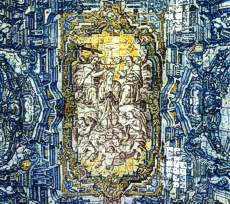
The narrative tiles adorning the walls of the main chapel and the carved cornice are from the early 18th century. Rebuilt after the 1755 earthquake, the vault has at its centre a fine polychrome panel depicting the Coronation of the Virgin. The main altar and eight-sectioned dome over the transept are decorated with magnificent carving in the rocaille style. The church houses an interesting collection of mannequins used in the Cinzas (Ashes) and Dores (Pains) processions, plus a series of Italian paintings depicting the life of the patron saint.
Igreja do Carmo (Carmo Church)
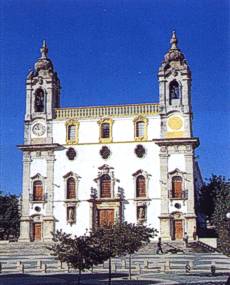
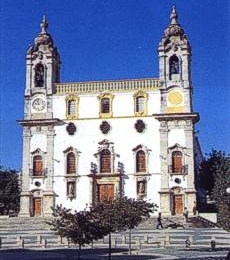
The bulky form of the Carmo church, with its imposing facade and twin bell towers, stands out against the city skyline. Building work continued throughout virtually the whole of the 18th century and into the first years of the 19th (the last bell tower was completed in 1807). The church houses an important collection of religious statuary, including nine statues of the Triumphal procession by the Algarvean sculptor Manuel Martins. Behind the church is the famous Capela dos Ossos (Chapel of Bones).
Igreja de São Pedro (Church of St. Peter)
Built in the 16th century on the site of a 15th-century mariners' chapel, this church underwent extensive modifications following the earthquake of 1755. It has a portico in the mannerist style (end of the 16th century) with a niche containing a statue of the patron saint. The interior consists of three naves with columns copied from those in the cathedral.
Igreja e Convento dos Capuchos (Capuchin Church and Monastery)
Built at the beginning of the 17th century, this structure has a facade typical of Capuchin architecture, with arcades and a statue set in a niche. Features a small, harmonious cloister. The former monastery is now adapted as a Hotel and Tourism School. Visits may be restricted.
Historic Hermitages
Ermida de Nossa Senhora do Ó
Situated on the ramparts, this chapel was rebuilt after the earthquake of 1755 and has an interesting facade. It is probably here, during the period of Moorish rule, that a statue of the Virgin mentioned in one of the Canticles of Santa Maria written by King Alfonso X of Castile was kept.
Ermida de São Sebastião
Of the original medieval structure, all that remains is a gothic chapel with a panelled vault. The main chapel has a carved and gilded retable (18th century) and the walls are decorated with blue and white and patterned polychrome tiles (17th century).
Ermida de Nossa Senhora da Esperança
Originally built in the 15th/16th centuries, this chapel was rebuilt in the 18th century. Its cupola and bell-tower are decorated with rococo ornamentation. At one time there was a lepers' hospital attached to it.
Ermida de Santo António do Alto / Antonine Museum
Built beside a watchtower in the Middle Ages, the chapel retains a stone marking the year of its construction - 1355 - and has a panelled vault from the early 16th century. The adjacent building houses the Antonine Museum with a collection of images, paintings and engravings related to Saint Anthony.
Ermida de Nossa Senhora do Pé da Cruz
This chapel dates from the 17th century. The edge of the facade and the large front window are profusely decorated in the rococo style (third quarter of the 18th century). The main chapel and triumphal arch are adorned with gilded carving. Features a statue of the patron saint (17th century) and twelve large canvasses depicting scenes from the Old Testament (18th century). On the rear facade is a monumental station of the cross with an unusual depiction made of cut tiles.
Ermida de São Luís
Located on what were once the outskirts of the city, this 17th-century structure was extensively rebuilt at the beginning of the 19th century. Features a neoclassical carved retable on the high altar and an interesting cupola.
Ermida de São Miguel
This was the private chapel (18th century) of a nobleman's house and has a facade of striking simplicity. The retable is carved in the rocaille style.
Celeiro de São Francisco (Granary of St. Francis)
This octagonal structure (18th century) was built within a garden as a place to take shelter from the heat. The representations in mortar work of Hercules and the giant Adamastor which adorn two sides of the facade are curious examples of the tastes of the age. The arms of the nobleman on whose orders the building was erected are visible over the door.
Theatre
Teatro Lethes
A former college of the Society of Jesus (16th-18th centuries), this building has the sober facade typical of Jesuit buildings. It was turned into a theatre in 1845 and is an interesting example of a 19th/20th century provincial playhouse, still hosting performances today.
Museums
Museu Municipal de Faro / Infante Dom Henrique Archaeological Museum
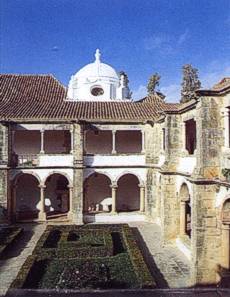
Housed in the Monastery of Nossa Senhora da Assunção, this was the first museum created in the Algarve. The monastery was raised on the site of the old Jewish quarter at the initiative of two pious sisters from Beja; work continued from 1519 until 1550. The building was completed by Queen Catarina (1507-1578) and is an important example of early Renaissance art in the Algarve.
The church door has pilasters with figurative decoration. The cloister is on two storeys, with four sets of arcades and decorative gargoyles in the shape of animals. There is an interesting 16th-century lookout tower.
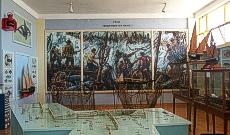
Museu Marítimo (Maritime Museum)
This museum houses a small but interesting ethnographic collection related to marine activities and fishing in the Algarve, including models of the different types of vessel used traditionally in the region.
Museu Regional do Algarve (Algarve Regional Museum)
This museum houses a valuable collection of objects and photographs related to the culture and traditions of the Algarve region.
Practical Information
Getting There: Faro International Airport is just 5 km from the city centre. Regular trains connect Faro to Lisbon (3-4 hours) and other Algarve towns. The bus station serves regional and national routes.
Getting Around: The historic centre is best explored on foot. Boat taxis from the marina take visitors to the beaches on the barrier islands of the Ria Formosa.
Best Time to Visit: Spring and autumn offer pleasant weather for sightseeing. Summer is ideal for beach visits but can be crowded. The mild Algarve winter makes Faro a year-round destination.