About Idanha-a-Velha
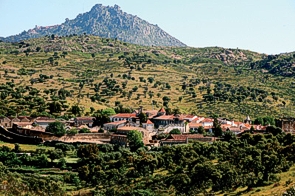
The little village of Idanha-a-Velha, some 50 km northeast of Castelo Branco, boasts an illustrious past spanning Roman, Visigoth and medieval times.
Founded by the Romans in the 1st century BC, it was the episcopal see under the Visigoths in the sixth century before sinking back into obscurity following the Moorish invasion in the eighth century.
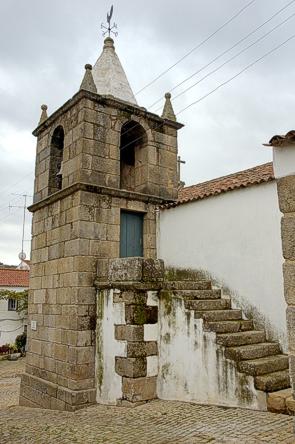
It is said to have been the birthplace of a Visigothic king, with its own bishops at the cathedral which was restored in the beginning of the 16th century but still preserves inscribed and sculpted Roman stones.
Today, Idanha-a-Velha (considered a national monument) emerges quite renewed - a historical village wisely adapted for those who live here and those who visit.
History of Idanha-a-Velha
Idanha-a-Velha consists of a remarkable group of ruins holding high standing among national archaeological works. It stands on a place where formerly was a Roman City (1st century BC), inserted in "Civitas Igaeditanorum", becoming a Roman Municipality later on.
An inscription from 16 BC records that "Quintus Iallius", a citizen from "Emerita Augusta" (Merida), "willingly gave a sundial to Igeditanos" - evidence of an urban site in those days. In 105 AD, an inscription on the Alcantara Bridge (an important Roman engineering work) lists the village as one of the most important Municipalities contributing to the bridge's construction.
In the Visigoth Era, under the name "Egitanea", the village witnessed golden times, being a diocese seat since 599 and a gold coining centre where tridents were minted. The Baptistery, ruins of the Bishop's Palace and the Se are material witnesses of those times.
The Arabs held the city until King Afonso III of Leon conquered it. Later, King Afonso Henriques delivered it to the Templar monks. King Sancho II chartered it in 1229, and King Dinis included it in the Order of Christ in 1319. King Manuel I chartered it again in 1510.
Sightseeing in Idanha-a-Velha
Walls and Gates
The Walls
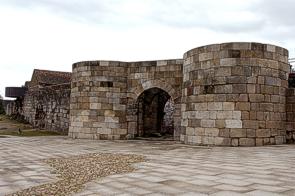
When you arrive in Idanha-a-Velha, you can admire the monumentality of its walls, small towers and the Porta Nova (new doorway). The walls reveal an oval shape 745 metres long with two entrances and four semicircular and three square keeps.
Porta Nova
The main entrance leading into the village interior.
Religious Heritage
Se Cathedral
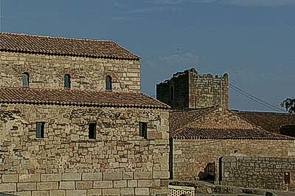
Dating from the beginning of Christianity with strong intervention during the Manueline Era. On the south side of the temple is a Paleo-Christian Baptistery from the 6th/7th centuries - one of the most important early Christian monuments in Portugal. Nearby are the ruins of the Bishop's Palace.
Mother Church
Having formerly been a Mercy Church, it shows Renaissance style (18th century) with some popular influences. Located in Pillory Square alongside the Manueline Pillory.
Sao Damaso Chapel
Mannerist style (1748), standing outside the walls near the Archaeology Office.
Holy Ghost Chapel
Small Mannerist Chapel built in the 16th/17th centuries. In mid-May, this place witnesses the traditional feast in honour of the Holy Ghost.
Sao Sebastiao Chapel
19th century chapel outside the walls.
Historical Monuments
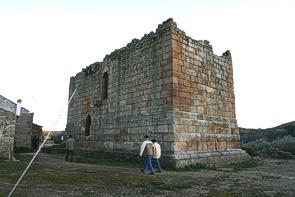
The Templar Tower
This military building from the 13th century was erected on the podium of the Roman forum (1st century). This is what remains of the Roman temple, possibly devoted to Venus. From this highest point, you get an exceptional view over the whole village.
Roman Dwelling Ruins
Fragments of a Roman dwelling (1st/3rd centuries) near the walls, which spread beyond the town walls before being fractionated when the urban web receded in the 4th century.
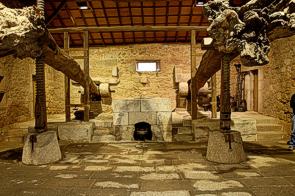
Lagar de Varas (Oil Press)
An important building in industrial archaeology, witnessing how the community profited from resources and transformed agricultural products. The recently rebuilt space shows a room with two great pressing bars and a boiler, and a next room with the olive tank and milling place. In the yard is a modern structure displaying one of the most important Roman epigraphic collections on the Iberian Peninsula.
The Pillory
Built in Manueline style, located in the square where two main village axes cross.
Communal Oven
Recently rebuilt, located on Rua do Castelo (Castle Street).
Outside the Walls
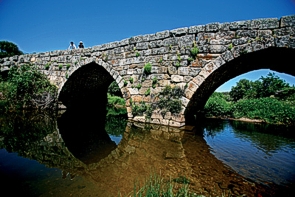
Roman Bridge
Looking over the Ponsul River, this important link in the road between "Merida" (Emerita Augusta) and "Braga" (Bracara Augusta) suffered several reconstruction works during the Middle Ages. On the fertile riverbanks you can see the village vegetable plots, important for the people's survival.
Practical Information
Tourist Office
Rua da Se. Tel: 277 914 280
Opening: 10am - 12.30pm / 2pm - 6.30pm
Festival
Holy Ghost Festival - Middle of May
Nearby
Monsanto - 12 km - The "most Portuguese village in Portugal"