About Monsanto
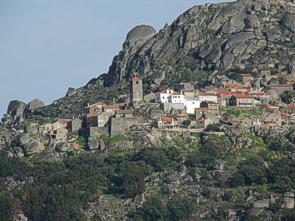
Monsanto was voted the "most Portuguese village in Portugal" in 1938. Nestling on the slope of a steep hill (Mons Sanctus in Latin), it rises abruptly above the prairie to a height of 758 metres (2,486 feet).
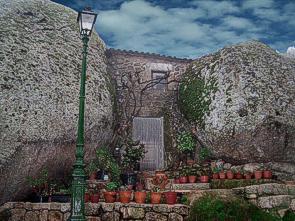
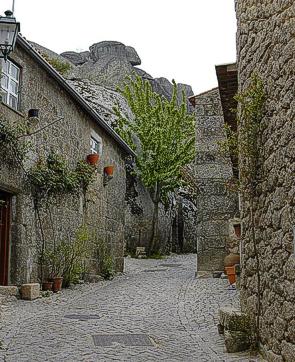
The most typical aspect of Monsanto is that the village developed around impressively big and miraculously balanced granitic boulders. Houses are built into, under, and around these massive rocks, creating a unique architectural landscape found nowhere else.
One of the most symbolic traditions is the Festival of the Holy Cross, held on 3rd May, commemorating resistance to a long history of sieges. Women carry typical rag-dolls known as "marafonas" to the top of the castle, and clay jars full of flowers are thrown from the walls.
History of Monsanto
This ancient place shows evidence of human presence since the Paleolithic Era, with archaeological evidence of a Lusitanian fortress and Roman occupation at St. Lawrence's field, as well as Visigoth and Arabian occupation.
King Afonso Henriques conquered Monsanto from the Moors and, in 1165, granted it to the Templar monks who had the Castle built under the orders of Gualdim Pais. The village was first chartered in 1174, then confirmed by Kings Sancho I (1190) and Afonso III (1217). King Sancho I rebuilt and repopulated the fortress, destroyed during fights against the King of Leon.
In 1308, King Dinis granted it a Charter allowing a fair near the Chapel of Sao Pedro de Vir-a-Corca. King Manuel I granted a New Charter in 1510, giving it the right to be a Town.
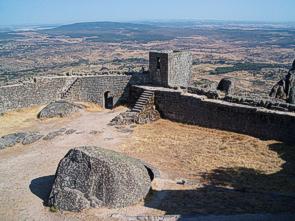
The impressive Castle of Monsanto was partly destroyed in the 19th century by an accidental explosion of the munitions storeroom.
Sightseeing in Monsanto
Churches and Religious Sites
Mother Church (Igreja Matriz)
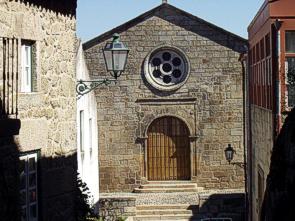
Probably built in the 15th century and restored in the 18th century, it still keeps older elements such as a Roman doorway. Inside, admire beautiful images and altars, especially the high altar with magnificent gold leaf work.
Igreja da Misericordia (Mercy Church)
Showing essentially Roman features, located in Mercy Square along with the Pillory and Antiga Capela do Socorro.
Capela de Sao Joao (St. John's Chapel)
Only one arch near the castle wall remains.
Capela de Sao Miguel (St. Michael's Chapel)
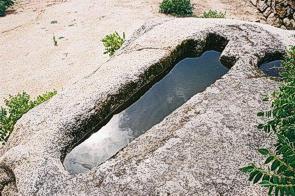
A Roman building erected in the 12th/13th centuries with medieval graves excavated in the rock. In the 16th century, this temple was in the centre of the village.
The Castle
Monsanto Castle
The old fortress has 2 doorways: Porta da Traicao (Betrayal Door) and the main entrance near the Sentry House (Casa do Guarda), an L-shape with vaulted arches. The castle, like the village, shows adaptations to the ground unevenness.
Inside the Castle walls are:
- The Cistern - In the middle of a polygon
- The Keep - The main tower
- Governors' House - Administrative building
- St. Maria do Castelo Church - Rebuilt on a former religious building belonging to Templar Monks. In May, the church holds the Feast of the Holy Cross.
Historic Buildings
Torre do Relogio (Clock Tower)
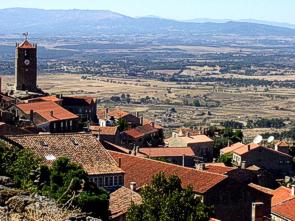
Climb to the top to see a copy of the silver clock, symbol of the award "The Most Portuguese Village of Portugal". Sit on the benches and enjoy the gorgeous view over Idanha plain.
The Pillory
Located in Mercy Square (Largo do Pelourinho).
Solar (Manor House)
From the 18th century, belonging to Giraldes de Andrade, Governor of Monsanto, now houses the tourist office.
Gruta (Cave)
Natural cave on the way to the castle.
Forno Comunitario (Communal Oven)
Near a natural belvedere overlooking the prairie and village houses.
Practical Information
Distances
- Idanha-a-Velha - 12 km
- Castelo Branco - 42 km
- Guarda - 42 km
- Lisbon - 258 km
Markets and Festivals
- Town market: 3rd Saturday of each month
- Festa das Cruzes: 3rd May
- Festa de Sao Sebastiao: 1st weekend in September
- Festa de Nossa Senhora da Azenha: 2nd weekend in September