About Moura
The name Moura (Moorish woman) is born from a mixture of legend and history - the tragic tale of Saluquia, daughter of the region's Moorish governor.
According to legend, Saluquia was waiting for her lover when his party was attacked by Portuguese soldiers, who then used the Arabs' clothes to trick her into lowering the drawbridge. She is said to have committed suicide, throwing herself from the castle tower in grief for her bridegroom's death and guilt for the enemy's victory.
The Arab influence remains visible in this peaceful town, surrounded by oaks and olive trees. The narrow streets and low whitewashed houses with their peculiar chimneys in the Moorish quarter preserve one of the best examples of Islamic urban planning in Portugal.
Major Landmarks
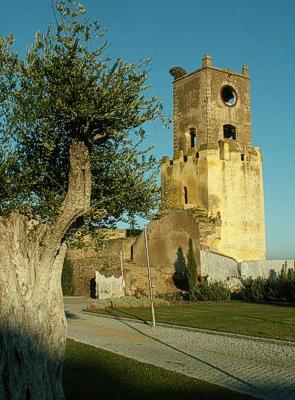
Castle
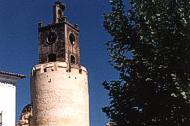
The Castelo de Moura dates from Muslim times when it was originally built. From those times, several towers remain, including the Torre de Taipa. In the 14th century, the castle was rebuilt by King Dinis, and the Torre de Menagem (keep) was added. Inside, vestiges of the old Convento de Nossa Senhora da Assuncao remain.
Moorish Quarter (Mouraria)
Integrated in the town's historic centre, the Mouraria is one of the biggest and best preserved in Southern Portugal. The quarter is formed by three streets and an alley, where whitewashed houses gleam and Arab characteristics are extremely marked. This is where the Arab Museum stands, with its collection of ceramics and tombstones illustrating Arab culture.
Mother Church (Igreja Matriz)
Erected in the mid-16th century by King Manuel I, the church features a rectangular plan with a simple facade. The portal decorated with plaited columns and Manueline motifs stands out, surmounted by an eye-window. The marble pulpit led to the church being declared a National Monument.
Church of Nossa Senhora do Carmo
Originally part of the first Carmelite Convent of the Iberian Peninsula, founded in the 13th century. The monks who founded the Convento do Carmo in Lisbon departed from here. The church shows Gothic style with later Renaissance influences.
Alqueva Dam Region
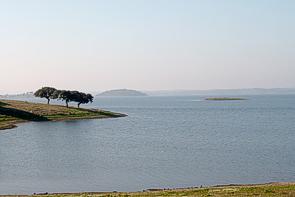
Nearby, the Alqueva Dam has created the largest artificial lake in Europe, offering water sports, river cruises, and stunning landscapes. The rupestral engravings at the dam zone are also worth visiting.
Practical Information
Getting There
Moura is located in the southeastern Alentejo, close to the Spanish border. It is accessible by car from Beja (about 60 km) or from Evora via the IP2.
Contenda Natural Reserve
The Contenda region, shared with Spain, is a natural reserve of great environmental quality with diverse flora and fauna, including deer - one of the few areas in Portugal where they can still be found.
Gastronomy
Local cuisine includes many Alentejo specialties: gazpacho (cold bread soup), ensopado de borrego (lamb stew), and the local acorda served with dried codfish or grilled sardines.
Handicrafts
Some blacksmith shops still produce artistically carved forged iron works - doors, picture frames, candlesticks, and decorative objects. Nossa Senhora do Carmo festivities in October bring many visitors.