About Portalegre Region
The Northern Alentejo is an almost mythical region where time moves differently - a land of endless plains and mountains, curative waters, and ancient castles built for war and peace.
Authenticity lies here, in the nobility our forebears lent to the stones of dolmens and menhirs, in the armorial bearings of manor houses, and in unique flavors created in ancient convents and wineries. The region holds Portugal's most important group of fortifications and the headquarters of powerful military religious orders.
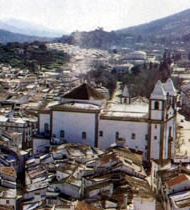
Portalegre itself lies on the slopes of Serra de Sao Mamede, a mountainous range with diverse flora and fauna now designated a natural park. The city is filled with fine Renaissance and Baroque mansions, testament to the prosperity brought by its famous tapestry workshops.
Places to Visit
Portalegre City
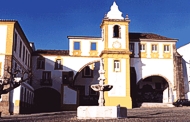
The Cathedral, built in 1556 and altered between 1737-1798, exhibits beautiful tile panels and paintings. Three convents - Sao Francisco, Santa Clara, and Sao Bernardo - are worth seeing. The latter, built in 1518, contains the elaborate marble tomb of its founder, Bishop Dom Jorge de Melo. The Museu Municipal displays religious art and a wonderful collection of Portuguese ceramics.
Marvao
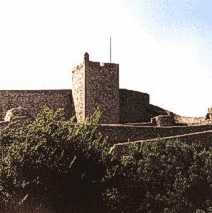
Spectacularly set on an escarpment facing Serra de Sao Mamede and Spain, this small medieval town is completely enclosed by walls. The 15th-century Mother Church and Municipal Museum are worth visiting, as is the Castle built by King Dinis in 1299. Marvao is a World Heritage candidate.
Castelo de Vide
Dating from Roman times, this spa town has preserved within its walls a remarkable patrimony: churches, fountains, mansions, Gothic doorways, and the characteristic maze-like Judiaria (Jewish quarter) with its 13th-century synagogue - one of Portugal's oldest.
Crato and Flor da Rosa
Crato became important in 1232 when the Order of the Hospitallers received vast territories here. Near Crato, the Monastery of Flor da Rosa, built in 1356, has been transformed into a stunning pousada that combines genuine monastic character with modern architecture.
Elvas
Just kilometers from the Spanish border, Elvas offers a Roman-Moorish castle rebuilt in 1226 and an imposing 16th-century aqueduct with 843 arches in up to five tiers, some rising above 30 meters. The garrison border town of Elvas is a UNESCO World Heritage Site.
Practical Information
Getting There
Portalegre is about 230 km northeast of Lisbon, accessible via the A6 motorway and then the N18. Regular bus services connect to Lisbon and other major cities.
Serra de Sao Mamede
The natural park offers hiking along marked footpaths, off-road adventures, and horseback riding. The peak rises to 1,025 meters with fine views throughout.
Where to Stay
The region has several historic pousadas: Santa Maria in Marvao, Flor da Rosa in Crato, Santa Luzia in Elvas (Portugal's first pousada, opened 1942), and Sao Miguel in Sousel.
Golf
The Ammaia Golf Club near Marvao, designed by Jorge Santana da Silva, is the first golf course in the North Alentejo region, with 18 holes set within the natural park.