About Santiago do Cacem
This land is a blend of maritime coast, pine forest, and Alentejan inspiration - Portugal's second largest municipality where history stretches back to prehistoric times.
Excavations at Castelo Velho (Old Castle) date human occupation to the late Neolithic period. The settlement was fortified by the Celts (3rd-2nd centuries BC) and subsequently Romanised as Mirobriga, growing into an important agricultural centre complete with spas and a large hippodrome for horse racing.
Following Germanic invasions in the 5th century, the Moors built a new castle named Cacem. The Knights Templar took the fortress in 1157, and Christians finally secured it in 1217. Today, the town offers visitors Roman ruins, medieval heritage, beautiful beaches, and the peaceful Santo Andre Lagoon.
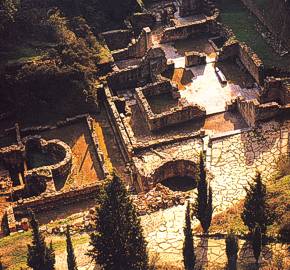
Mirobriga - Roman Ruins
This archaeological station of great importance is thought to have been a fortified Celtic settlement from the 4th century BC, later extensively Romanised after the 1st century AD. You can visit:
- Shrine to Venus and Aesculapius - Temple ruins dedicated to the goddess of love and the god of medicine
- Roman Baths - Well-built using marble and decorated with frescoes, serving the local population and pilgrims visiting the shrine
- Hippodrome - Located 1 km away, used for training and horse racing, testifying to Mirobriga's importance
The town began its gradual decline from the 4th century AD, and by the time of the Moorish invasions around 712, it had been abandoned - the population having moved to the nearby hill where the medieval castle now stands.
The City
Castle
The origins of Santiago do Cacem's castle are tied to legend - the victory of a warrior princess over a fierce Moor called Kassen on St. James's Day. Rectangular in shape with ten towers and cubic turrets reinforcing the walls, the castle offers superb views in every direction. A fortification of Moorish origin, it was later rebuilt by Christians. The Chapel of St. Peter (16th century) stands on the castle slopes.
Parish Church
Built by the Order of the Gladiators (Espatarios) in the 13th century and rebuilt after the 1755 earthquake, the church retains its Gothic portal on the south side. Inside, don't miss the notable Reliquary of the Holy Cross offered by Byzantine princess Vetacia, and the outstanding 14th-century Gothic high relief depicting St. James fighting the Moors.
Historic Centre
The old nerve centre of the city with steep, narrow streets is dominated by the Conde de Bracial Square. Located on the eastern slopes of the castle, this area constitutes a priceless heritage with typical streets, emblazoned houses, and a pillory dated 1845.
Municipal Museum
Housed in the old gaol, this well-remodelled museum features wonderful archaeological collections from Mirobriga, including frescoes and artifacts found by rural workers. The ethnographic section shows typical Alentejan dwelling places with 19th-century furnishings, including beautiful porcelain, portraits, and pottery from the counts of Avillez.
Municipal Windmill
Standing on a hill overlooking the town, this totally rebuilt windmill still demonstrates traditional milling of cereals on windy days.
Beaches and Nature
Santo Andre Lagoon
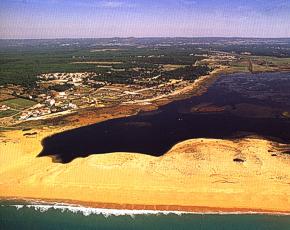
Close by the sea lies this excellent spot for windsurfing. Rich in fish and home to a large variety of water birds, it's perfect for those seeking peaceful contemplation. Enjoy the famous fish or eel stews at local restaurants for a marvellous gastronomic experience.
Beaches
The coast offers fine white sand beaches stretching for several kilometres - perfect for long walks and relaxation. The blend of Alentejo warmth and Atlantic freshness creates an ideal seaside destination.
Barragem de Campilhas
A restful stretch of calm water providing excellent conditions for canoeing, windsurfing, and angling.
Rio de Figueira Park
Laid out on the slopes leading up to the castle, this park offers swimming pool, tennis courts, volleyball, badminton, playgrounds, and pinewoods with jogging tracks.
Surrounding Area
Cercal do Alentejo
A town surrounded by interesting farms and estates. About 4 km away, a viewpoint offers excellent views over the Atlantic and Serra da Mina. The Cercal hills reach 346 meters - the municipality's highest elevation.
Sao Francisco da Serra
A typical Alentejan village marked by magnificent chimneys. Visit the church and ruins of Nossa Senhora do Livramento.
Handicrafts
The region offers chairs and stools of wood and wicker at Sao Bartolomeu da Serra and Sao Domingos da Serra; saddlery at Santiago do Cacem and Cercal do Alentejo; ceramics at Santo Andre and Ermidas Sado; and woodwork and cork at Cercal do Alentejo.
Gastronomy
Local cooking blends Alentejan traditions with coastal produce: fish stew, eel stew, game dishes, pork with fried bread, acorda with poached egg, and cheese. Try alcomonias - delicious cakes made with pine kernels, flour, and honey.